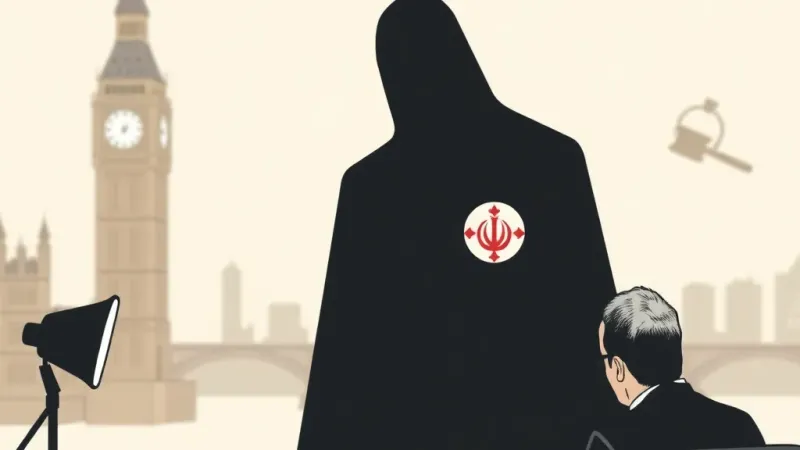
A London court has heard explosive allegations suggesting that the stabbing of a UK-based journalist was a premeditated act orchestrated by a third party operating at the behest of the Iranian state. This revelation emerged during preliminary proceedings, casting a grave geopolitical shadow over the incident and raising significant concerns about foreign interference on British soil. The target, a prominent figure in exile journalism, sustained non-life-threatening injuries in the audacious attack.
The court was told the journalist, whose identity remains protected for security reasons but is known for critical reporting on Iranian affairs, was attacked on a quiet residential street in west London in early November. Prosecutors laid out evidence indicating the assailants were allegedly acting under explicit instructions, suggesting a sophisticated network rather than a random act of violence. The victim has since recovered from injuries, but the psychological impact and broader implications persist.
Central to the prosecution's case is the claim that a "third-party entity" was contracted to carry out the assault, with direct links traced back to elements within the Iranian apparatus. This alleged modus operandi points to an escalating pattern of attempts to silence dissent and intimidate critics abroad. "The evidence meticulously assembled points to a clear directive emanating from foreign actors seeking to suppress free speech," stated prosecuting barrister Ms. Evelyn Clarke. "This was not a spontaneous act but a calculated attempt to send a chilling message."
The allegations have immediately triggered widespread concern among international human rights organizations and free press advocates. Many view this as a dangerous escalation of transnational repression, where journalists and dissidents living in democratic nations face threats from their countries of origin. Dr. Alistair Finch, a geopolitical analyst at the London Institute for Global Studies, remarked, "If these allegations are proven, it signifies a direct challenge to the sovereignty of nations like the UK and underscores the expanding reach of authoritarian regimes in targeting their critics overseas. It demands a robust international response."
Police forces have been working diligently on the case, with ongoing investigations reportedly involving counter-terrorism units due to the international implications. While specific details of the alleged "third party" remain under wraps as the legal process unfolds, authorities have reportedly gathered substantial digital and forensic evidence. The unfolding trial is expected to scrutinize the full extent of the conspiracy, aiming to bring all responsible parties, both directly involved and those who allegedly ordered the attack, to justice. This incident serves as a stark reminder of the perils faced by journalists globally, particularly those challenging powerful states.
The trial continues, with further evidence expected to be presented, painting a fuller picture of the alleged plot and its architects. The outcome will undoubtedly be watched closely by diplomatic circles and press freedom organizations worldwide, as it could set a precedent for how nations respond to alleged state-sponsored acts of aggression on their soil.