
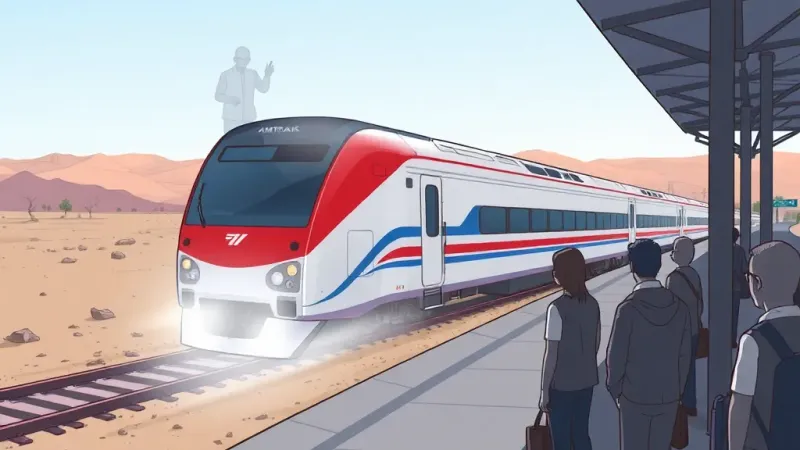
The Amtrak San Joaquin line, a vital artery connecting California's bustling Central Valley, is currently under intense scrutiny for what many observers are calling a deliberate degradation of service quality. Rather than augment capacity to meet burgeoning demand, critics contend that recent operational adjustments are inadvertently, or intentionally, creating an increasingly undesirable travel experience for passengers. This contentious "make it suck so nobody rides" approach, as some public commentators have dubbed it, reportedly manifests through measures such as reducing the number of available railcars during peak hours, leading to significant overcrowding, decreased comfort, and extended overall journey times.
This purported strategy stands in stark contrast to California's ambitious long-term goals of fostering sustainable public transportation and substantially reducing reliance on personal automobiles. For the thousands of daily commuters and intercity travelers who depend on the San Joaquin service, what was once lauded as a comfortable, efficient, and environmentally friendly alternative to congested highways is rapidly becoming a source of considerable frustration. The perceived intentional erosion of service quality, rather than strategic investment in expansion, threatens to unravel years of concerted efforts to cultivate rail ridership across one of the nation's most vital transportation corridors.
Passengers frequently report a noticeable decline in their overall travel experience. Overcrowding is not merely an inconvenience; it translates directly to a severe reduction in personal space, a frequent shortage of guaranteed seating, and often, protracted boarding and disembarking processes at key stations. This operational shift has prompted numerous long-time patrons to actively seek alternative modes of transport, directly undermining the very ridership figures Amtrak aims to sustain or expand. "I used to genuinely look forward to my bi-weekly journey from Stockton to Sacramento," stated Eleanor Vance, a regular commuter who has increasingly turned to carpooling. "Now, it feels less like a reliable transport option and more like a gamble on whether I'll even secure a seat, let alone enjoy a productive or relaxing ride. It’s profoundly disheartening when you actively wish to choose the greener option, but the option itself becomes intrinsically unappealing."
The San Joaquin route traverses a rapidly growing region, experiencing sustained increases in demand for intercity rail as population centers expand and fluctuating fuel prices continue to influence travel choices. While acknowledging the inherent complexities of rail infrastructure development and intricate operational logistics, the response of effectively shrinking available capacity instead of proactively pursuing robust solutions has drawn widespread condemnation. Critics strongly argue that short-term operational savings or capacity management are being prioritized over the enduring health, utility, and public trust in a critical public transit system.
The intensifying debate now centers on whether Amtrak and collaborating state transportation authorities will decisively pivot from what is widely perceived as a reactive, demand-discouraging approach. The public and policymakers are increasingly advocating for a proactive strategy unequivocally focused on genuine capacity enhancement, comprehensive service improvement, and a renewed commitment to passenger comfort. The long-term viability, economic contribution, and public acceptance of essential rail services like the San Joaquin line may ultimately hinge on this pivotal policy shift, as public patience for consistently declining standards demonstrably wanes in an era demanding efficient and sustainable mobility.


