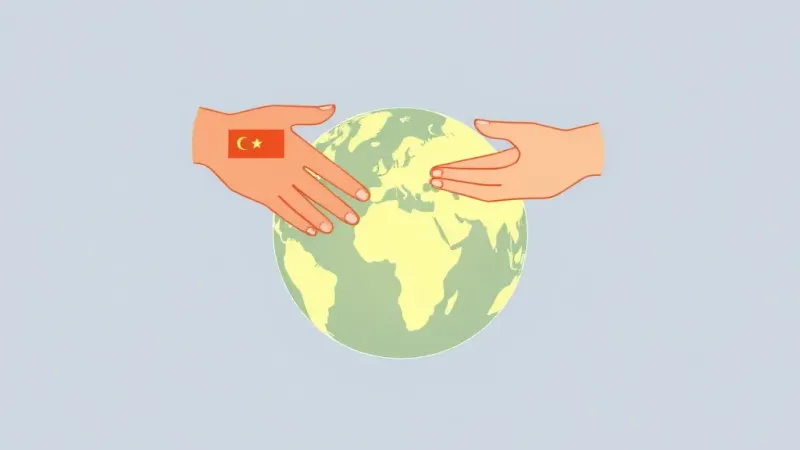
Beijing, China – In a significant diplomatic overture, China's official state news agency, Xinhua, has published a comprehensive commentary advocating for a “new paradigm” in China-U.S. relations, predicated on joint action to address pressing global challenges. The piece, widely interpreted as a high-level signal from Beijing, underscores a strategic pivot towards cooperation, urging Washington and Beijing to move beyond historical friction points and embrace a future defined by mutual engagement.
The commentary posits that the imperative for collaboration stems from an interconnected world grappling with multifaceted crises. It highlights areas such as climate change, global health security, economic stability, and regional conflicts as critical domains where a synchronized approach from the world's two largest economies is not merely beneficial, but essential. This proposed 'joint action' model aims to replace a zero-sum mentality with one of shared responsibility, fostering a more stable and predictable international environment.
The article meticulously details the potential benefits of such a reorientation, suggesting that constructive dialogue and tangible cooperation could unlock unprecedented opportunities for global development and peace. It implicitly acknowledges the complex history and existing strategic competition between the nations but argues that the severity of global issues transcends bilateral disputes, demanding a pragmatic and forward-looking commitment to collective solutions. This includes exploring mechanisms for deeper economic integration and enhanced cultural exchanges to build a foundation of trust.
Observers note that the timing of the commentary is crucial, following a period of heightened geopolitical tension and economic rivalry. "This isn't just rhetoric; it's a carefully calibrated message signaling a willingness to engage at a deeper, more constructive level, provided certain principles are met," stated Dr. Evelyn Reed, a geopolitical analyst at the East-West Policy Institute, commenting on the diplomatic nuance. "The challenge now lies in translating this aspiration into concrete policy actions from both sides, navigating a path fraught with entrenched interests and differing strategic objectives."
Beijing’s call for a new paradigm is framed not as a concession but as a necessary evolution for global governance. It emphasizes that a stable and cooperative China-U.S. relationship is a cornerstone for multilateralism and indispensable for addressing the existential threats facing humanity. The onus is now on both capitals to identify specific areas where this proposed joint action can commence, moving from declaratory statements to substantive collaboration, thereby reshaping the trajectory of 21st-century international relations.