
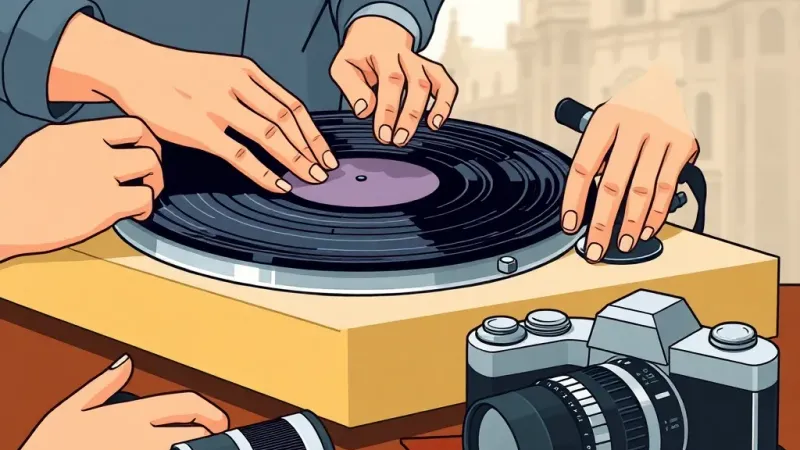
CAMBRIDGE, UK – A noticeable cultural shift is sweeping through Cambridge, as a growing number of its inhabitants, particularly within the vibrant university community, are actively disengaging from the pervasive digital realm to embrace the haptics and authenticity of analogue technologies. This resurgence is manifesting in various forms, from the burgeoning popularity of vinyl records and film photography to the unexpected reappearance of typewriters in study spaces.
Local businesses are reporting a significant uptick in demand for analogue goods. "We've seen our vinyl sales nearly double in the last two years, particularly among the under-25 demographic," states Mr. Arthur Pendelton, proprietor of 'Sound & Groove,' an independent record shop near Trinity College. "They appreciate the artwork, the ritual of placing a needle, and the perceived warmth of the sound. It's a full sensory experience that streaming can't replicate."
The trend extends beyond music. University societies dedicated to film photography have seen membership soar, with students eager to learn darkroom techniques and the patient art of shooting on physical film. Ms. Chloe Davies, a third-year English literature student and president of the 'Cambridge Lens & Light Society,' explains, "There’s something incredibly satisfying about waiting for development, not knowing exactly how your photos will turn out. It forces you to be more deliberate, more present, unlike the instant gratification and endless scrolls of smartphone photography."
Academics suggest this analogue renaissance is more than just nostalgia; it's a direct response to digital fatigue and an inherent desire for authenticity in an increasingly virtual world. "We're observing a conscious rebellion against the ephemeral nature of digital content and the constant overwhelm of screen time," comments Professor Elara Vance, a media studies lecturer at King's College. "For many, analogue represents a more permanent, curated, and ultimately more meaningful form of engagement with media and art. It's a tactile anchor in a fluid digital ocean."
The implications of this shift are wide-ranging. Beyond boosting local economies and fostering new communities, it encourages a slower, more mindful consumption of culture. While digital platforms continue to dominate, Cambridge's embrace of the analogue offers a compelling counter-narrative, proving that the old ways still hold considerable appeal for a generation often deemed exclusively digital.


