
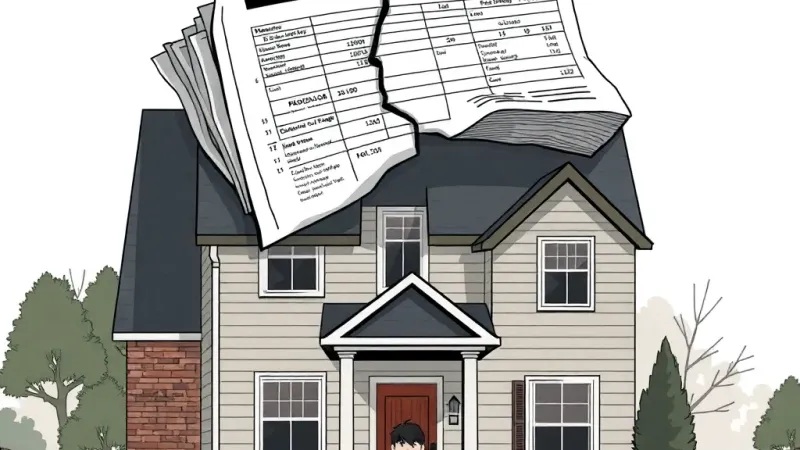
CHAMPAIGN, IL – A palpable wave of frustration is sweeping through Champaign, as local homeowners and businesses grapple with what many describe as an unsustainable surge in property tax liabilities. The escalating burden has ignited a fervent discussion, with recent commentary in local media advocating for nothing less than a 'property-tax revolt' to address the perceived fiscal overreach.
Over the past decade, property valuations and corresponding tax bills in Champaign County have seen consistent upward trajectories, with many residents reporting increases of 15% to 25% on their annual statements over the last five years alone. This trajectory, while ostensibly funding essential public services, is increasingly forcing long-time residents, especially those on fixed incomes, into precarious financial positions, threatening their ability to remain in their homes.
Eleanor Vance, a retired public school teacher who has resided in her Champaign home for over four decades, articulated the growing despair. "Each year, it's a new shock," Vance stated, her voice tinged with weariness. "My fixed income simply cannot keep pace with these escalating demands. We pay for schools, for roads, for public safety – all vital, of course – but at what point does the cost become so prohibitive that it actively drives people out of the community they helped build? It feels like we're being taxed out of our own homes."
The substantial revenue generated by property taxes forms the bedrock of funding for Champaign's robust public education system, critical infrastructure projects, and a wide array of municipal services. City officials, while acknowledging taxpayer concerns, often point to rising operational costs, inflationary pressures, and the need to maintain competitive services and facilities as primary drivers for budget increases.
However, critics argue that local government bodies are not doing enough to explore alternative revenue streams or to implement more stringent expenditure controls. Dr. Marcus Thorne, an urban economics researcher at a regional university, suggested, "While property taxes are a foundational revenue source, municipalities must continuously evaluate their entire fiscal portfolio. Exploring economic development initiatives that broaden the tax base, conducting comprehensive efficiency audits of public departments, and even advocating for state-level reforms to how public education is funded, could alleviate some of the pressure on homeowners."
Local advocacy groups are reportedly mobilizing, planning community meetings and petition drives aimed at pressuring the County Board and City Council to conduct an exhaustive review of tax assessment methodologies and spending priorities. The burgeoning movement seeks not merely a temporary respite, but a fundamental restructuring of how Champaign funds its future, ensuring both fiscal solvency and resident stability. The coming months are expected to reveal whether this simmering discontent will translate into concrete policy changes or intensify into a full-fledged civic challenge.


