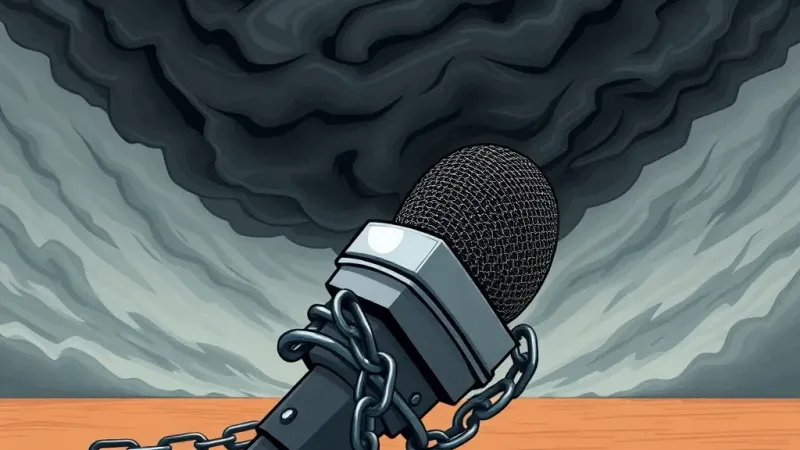
The landscape of journalism in China is undergoing a profound and troubling transformation, as a severe economic downturn converges with escalating state control to effectively suffocate independent media. Once a burgeoning sector, albeit one operating within strict parameters, the nation's press is now witnessing a systemic decline marked by significant layoffs, plummeting advertising revenues, and a deepening chasm in the public’s access to diverse information.
Reports from within the industry paint a grim picture. Advertising expenditure, a vital lifeline for media organizations, has reportedly seen a precipitous drop, with some estimates suggesting a decline of over 30% in sectors critical to media revenue, such as real estate and technology. This financial squeeze has led to widespread restructuring and, more often, outright closures. Major regional newspapers and digital platforms, already contending with the digital disruption, are finding themselves unsustainable. "We've seen an exodus of talent," noted Ms. Li Wei, a former senior editor at a now-defunct Shanghai-based business magazine. "Journalists are either leaving the profession entirely or shifting to state-controlled outlets where the editorial line is predetermined."
Beyond the economic pressures, the unwavering hand of state censorship continues to tighten its grip. As economic anxieties mount, authorities appear more resolved to control narratives, particularly those concerning domestic stability and economic performance. Editorial directives have become more frequent and more stringent, limiting the scope for investigative reporting and critical analysis. This dual pressure creates an environment where objective reporting is not just financially unviable but also politically perilous.
The impact extends far beyond the newsrooms. For the average citizen, the erosion of independent journalism means a reduced capacity to engage with nuanced perspectives on complex issues, from local governance to national policy. Critical scrutiny, a cornerstone of a well-informed populace, becomes a rarity. "It’s getting harder to find out what's really happening on the ground," remarked Mr. Chen Guo, a Beijing resident. "Everything feels... filtered. You hear less about problems and more about achievements."
Analysts suggest that this trend risks long-term consequences for China's societal development. "A healthy economy, despite its challenges, benefits from transparent reporting and diverse viewpoints," explained Dr. Anja Hoffmann, an East Asian media specialist at the Global Policy Institute. "When information flow is restricted, it can hinder effective problem-solving and perpetuate misperceptions, both domestically and internationally." The current trajectory indicates a future where the narrative landscape is increasingly monolithic, raising significant questions about the future of public discourse and accountability within the world’s second-largest economy.