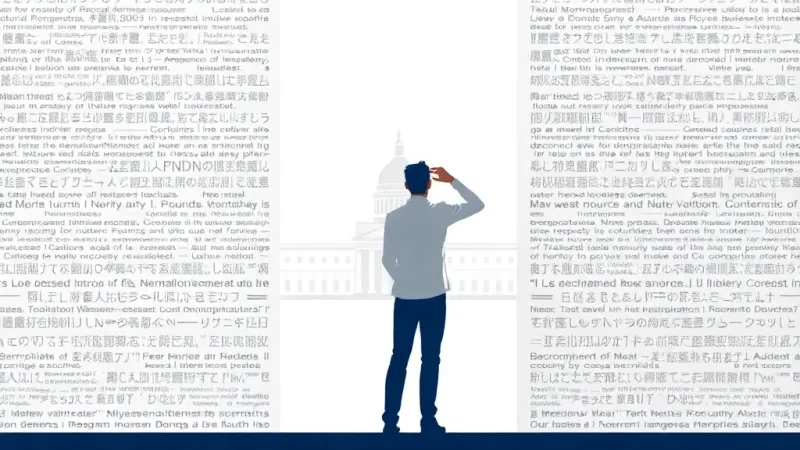
Baltimore, MD – A growing chorus of voices is challenging the pervasive use of specialized terminology across various sectors, igniting a crucial debate about the accessibility of information and the health of public discourse. Recent commentary, notably in the Baltimore Sun, has amplified community frustrations, questioning whether complex jargon serves precision or merely obscures vital details from the average citizen.
Critics argue that the increasing reliance on niche vocabulary in fields from technology and urban planning to healthcare and government policy creates an unnecessary barrier, effectively alienating segments of the population. This linguistic divide, they contend, undermines transparency and stifles meaningful public participation in decisions that directly affect their lives. The fear is that critical understanding is being replaced by a superficial acceptance, or worse, outright disengagement due to incomprehension.
Consider discussions around municipal infrastructure projects, for instance, where terms like 'adaptive reuse,' 'transit-oriented development,' or 'placemaking initiatives' frequently dominate presentations. While these phrases hold specific meaning for urban planners, they often leave residents bewildered, unable to fully grasp the implications for their neighborhoods. This communication gap can lead to apathy or mistrust, hindering the collaborative spirit essential for effective governance.
Eleanor Vance, a retired educator from Hampden, expressed her exasperation following a recent community meeting on a proposed zoning amendment. 'They talked about 'stakeholder synergy' and 'optimization of spatial parameters,' and all I wanted to know was if they were going to tear down the old library,' Vance lamented. 'It felt like they were speaking a different language, designed to make us feel unqualified to contribute.'
However, proponents of specialized language argue for its indispensable role in precision and efficiency within expert communities. Dr. Alistair Finch, a senior researcher at the Institute for Civic Language, noted, 'Every discipline develops its shorthand to communicate complex ideas accurately and concisely among peers. Eliminating all technical terms would lead to lengthy, convoluted explanations that could inadvertently introduce ambiguity where none existed.' Finch emphasized that the challenge lies not in the existence of jargon, but in the failure to translate it effectively for broader audiences.
The intensifying dialogue underscores a critical need for institutions and professionals to prioritize clear, accessible communication. While expertise demands specific terminology, the democratic ideal of an informed populace necessitates a conscious effort to bridge the linguistic divide. The call from the community is clear: empower citizens with understanding, ensuring that crucial information is delivered not just accurately, but comprehensibly, fostering genuine civic participation rather than exclusion.