
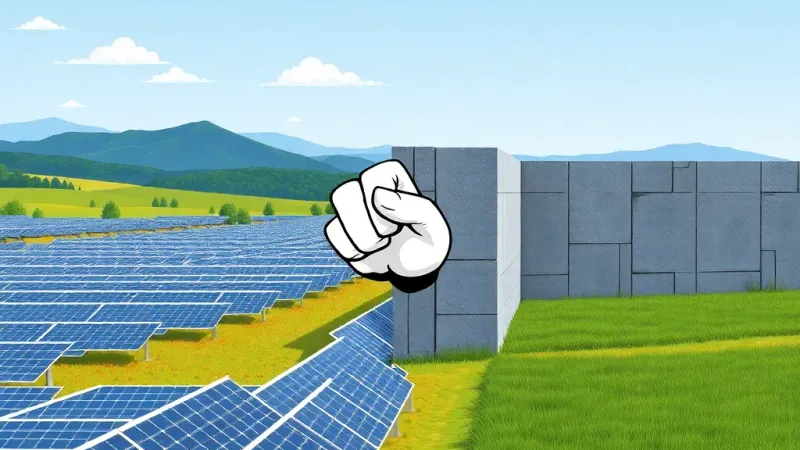
RALEIGH, N.C. – A contentious directive from the North Carolina Utilities Commission (NCUC) ordering the cancellation of numerous utility-scale solar projects slated for 2026 has ignited a fierce legal and public battle, pitting clean energy advocates against state regulators. The decision, which threatens to derail a significant portion of the state’s planned renewable energy expansion, has been met with immediate and forceful opposition from a coalition of environmental groups and clean energy proponents who argue it undermines North Carolina's ambitious decarbonization goals.
The NCUC’s order, issued earlier this month, cites concerns regarding grid stability and the perceived need for a more staggered integration of new power sources into the state’s electrical infrastructure. While the commission has emphasized its commitment to the state's clean energy transition, it contends that the proposed 2026 solar influx would pose operational challenges, necessitating a reevaluation of the current energy procurement timeline. This move follows ongoing discussions about the most efficient and reliable path to achieving the targets set forth in House Bill 951, which mandates significant carbon emission reductions for regulated utilities.
However, the coalition, spearheaded by organizations such as the North Carolina Alliance for Clean Energy and Environmental Justice United, views the decision as a severe setback. "This isn't just a bureaucratic delay; it's a fundamental challenge to the very foundation of our state's clean energy future," stated Dr. Alana Reed, a lead strategist for Environmental Justice United, in a recent press briefing. "Scrapping these projects arbitrarily jeopardizes millions in private investment, stifles job creation in the green sector, and, most critically, pushes our state further away from its crucial climate commitments." Opponents specifically highlight the economic benefits of solar development, including local tax revenues and job creation in rural areas where many of these projects are sited.
North Carolina has been a national leader in solar energy deployment, with significant utility-scale capacity already operational. House Bill 951, signed into law in 2021, sets targets for utilities to reduce carbon emissions from electricity generation by 70% from 2005 levels by 2030, and to achieve carbon neutrality by 2050. The planned 2026 solar projects were considered integral to achieving the near-term 2030 objective, providing hundreds of megawatts of clean power. Critics argue that without these projects, the state will struggle to meet its legally mandated targets, potentially necessitating more expensive or less environmentally friendly alternatives in the future.
The opposing groups have formally filed petitions for reconsideration and signaled their intent to pursue all available legal avenues to reverse the NCUC's order. They are calling for transparent data and a comprehensive impact assessment to justify the commission’s decision, which they claim lacks sufficient empirical backing. The outcome of this legal confrontation is poised to have profound implications for North Carolina's energy policy, potentially reshaping the pace and direction of its transition away from fossil fuels and influencing investment patterns in the state’s burgeoning renewable energy sector for years to come. The coming months will determine whether the sun will indeed rise on these anticipated solar installations or if their future will remain dimmed by regulatory dispute.


