
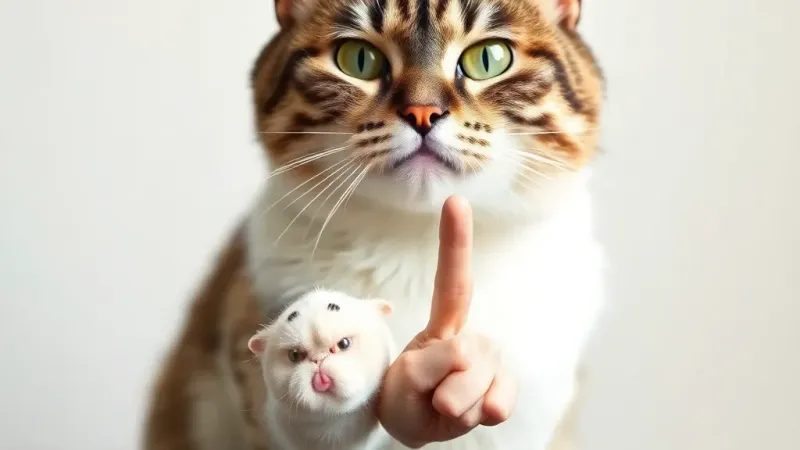
The digital landscape has once again become a battleground of opinion, this time over a peculiar new pet accessory: a 3D-printed arm prop designed to make cats appear to be issuing a human middle finger gesture. This irreverent item, marketed primarily for Halloween, birthdays, and humorous photo opportunities, has rapidly ascended to viral status, eliciting both fervent amusement and stern condemnation across social media platforms.
The miniature, anatomically detailed arm, crafted from lightweight, pet-safe resin, typically measures approximately three inches in length. It features a hand with the middle finger extended in an unmistakably defiant pose. Designed for temporary attachment via pet-friendly adhesives or small, adjustable straps, the prop aims to inject a dose of subversive humor into the often-wholesome world of pet costuming. Online retailers have quickly capitalized on its popularity, promoting it as a unique and memorable way for pet owners to express their playful side.
Proponents of the accessory argue its harmless, comedic value. "It's just a bit of fun, a way to add a silly twist to pet photos," commented Ms. Evelyn Reed, a prominent pet humor blogger based in Austin, Texas. "Our pets are family, and sometimes injecting a little irreverence just lightens the mood. It's not hurting anyone, and frankly, my cat looks hilariously unimpressed, which is precisely the point."
Conversely, critics contend that the item crosses a line from innocent fun into disrespectful anthropomorphism. Dr. Alistair Finch, a London-based animal ethics commentator, voiced concerns regarding the broader implications. "While seemingly innocuous, assigning such a deliberately offensive human gesture to an animal trivializes both the animal's natural dignity and the meaning of the gesture itself," Dr. Finch stated. "It reflects a growing trend where pets are treated less as companions and more as props for human amusement, often without consideration for ethical boundaries."
The emergence of this particular prop underscores a fascinating cultural inflection point in pet ownership. As the relationship between humans and their animal companions continues to evolve, so too does the market for pet-related novelty items. From elaborate costumes to high-tech gadgets, owners are increasingly seeking unique ways to integrate their pets into their personal narratives and online personas. This 3D-printed accessory, regardless of individual opinion, undeniably taps into that desire for distinctive and shareable content. Its longevity in the novelty market will likely hinge on the delicate balance between its shock value and evolving public sentiment regarding acceptable forms of pet humor.


