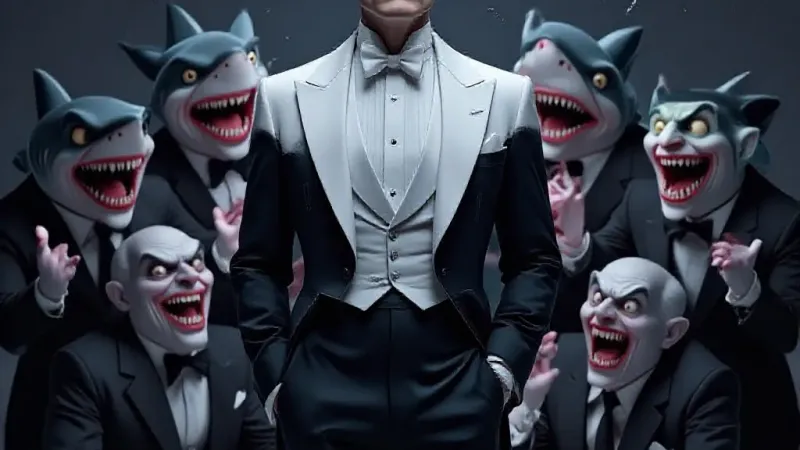
The recent pronouncement from TheWrap, suggesting esteemed director Christopher Nolan ought to embrace the horror genre, extends beyond mere critical musing. It serves as a telling indicator of the entertainment industrial complex’s perpetual quest for novelty, even from its most established creative brands. The article, citing specific scenes from Nolan’s existing oeuvre as proof of latent horror sensibilities, inadvertently highlights the market’s incessant pressure on successful creators to both innovate and adhere to a predictable pathway to profit.
In an era defined by content saturation and increasingly fickle audience attention, the algorithmically-informed punditry often positions itself as an oracle of market demand. The push for Nolan, a director synonymous with cerebral blockbusters, to pivot into horror isn't simply a creative whim; it implicitly acknowledges horror’s proven economic viability. The genre consistently delivers high returns on comparatively modest budgets, a tantalizing prospect for studios navigating tightening margins and the escalating costs of tentpole productions. For an auteur like Nolan, whose films command significant investment and attract massive global audiences, a lower-risk, high-reward genre could be perceived as a strategic diversification, ensuring continued relevance and a fresh hook for marketing departments eager for a new angle.
This critical "suggestion" also underscores the commodification of the auteur. Directors of Nolan’s stature become brands themselves, their creative output analyzed not just for artistic merit but for its potential to unlock new revenue streams or capture new demographic segments. The public, and by extension, the market through its various media organs, doesn't just consume their work; it actively participates in shaping its trajectory, often projecting its desires onto the creator. "Nolan does horror" becomes a headline in waiting, a potential event film in itself, demonstrating the inherent value placed on a recognizable name entering uncharted (for them) territory. This constant cycle of anticipation and speculation is a core engine of the attention economy, ensuring continuous engagement even between major releases.
Such pronouncements illuminate the peculiar dynamic between artistic ambition and commercial imperative within contemporary media. While the original piece frames its argument through creative interpretation and the perceived stylistic congruities, the underlying message is clear: even those at the apex of cinematic achievement are subject to the market’s subtle, yet powerful, nudges towards optimizing their output. The constant churn for the next big thing, the next genre-bending experience from a known quantity, means that even a proven hitmaker like Nolan finds his future endeavors being pre-scripted by the collective desire for both familiarity and radical departure. The content machine, it seems, has already begun outlining his next venture, whether he’s aware of it or not, driven by the ceaseless demand for novel engagement from established names.