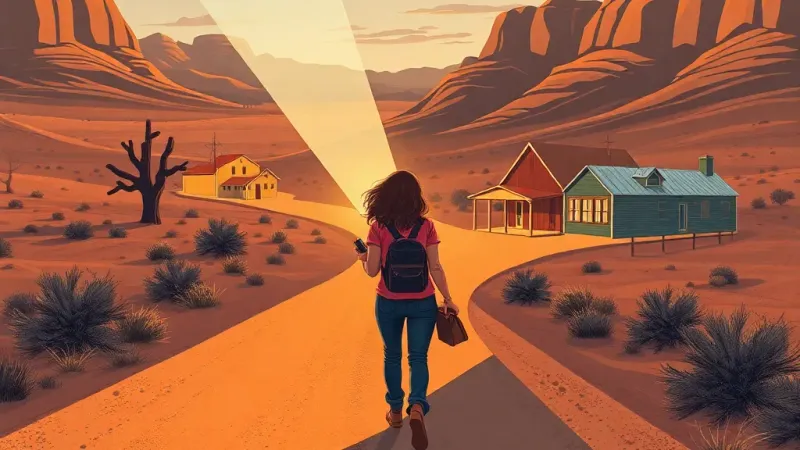
Sarah Jenkins, a distinguished alumna of the Walter Cronkite School of Journalism and Mass Communication at Arizona State University, has embarked on a pioneering journalistic endeavor, returning to her native rural Arizona to establish a dedicated platform for hyperlocal storytelling. Her mission seeks to bridge the informational chasm that often isolates remote communities, bringing their unique narratives to the forefront. This initiative marks a significant pivot from the traditional post-graduation trajectory, underscoring a commitment to underrepresented voices and the critical role of grassroots reporting.
The dearth of comprehensive local reporting in rural areas has long been a critical concern for media scholars and community leaders alike. As major news organizations consolidate or retract their coverage from less populated regions, vital local issues—from economic development and educational challenges to cultural celebrations and environmental stewardship—frequently go unreported. Jenkins' project directly addresses this void, aiming to provide a consistent and nuanced journalistic lens for communities often overlooked by metropolitan news cycles, ensuring their concerns are heard and documented.
Growing up amidst the vast landscapes and tight-knit communities of eastern Arizona, Jenkins developed a profound appreciation for the intricate tapestry of rural life. Her project, tentatively named "Frontier Echoes," will initially focus on a cluster of counties, traversing hundreds of miles to capture the daily realities of ranchers, small business owners, tribal elders, and civic leaders. "My goal isn't just to report on these communities, but to report with them, fostering a sense of ownership over their own stories," stated Jenkins in a recent interview. "There's a richness here, a resilience that often gets lost in the broader narrative."
The logistical challenges of reporting across expansive, sparsely populated territories are considerable, ranging from unreliable internet access to vast travel distances. However, Jenkins views these as opportunities to build deeper trust and connections. "You can't parachute in and expect to understand the nuances overnight," she explained. "It requires time, presence, and a genuine desire to listen and embed within the community." Professor Alistair Finch, a veteran journalism educator at a major university, lauded Jenkins' approach. "This is precisely the kind of boots-on-the-ground journalism that strengthens civic discourse at its most fundamental level," Finch commented in a recent statement. "It's about nurturing democracy from the grassroots up, something increasingly rare."
Jenkins plans to utilize a multi-platform approach, leveraging online articles, short documentaries, and community engagement sessions to disseminate her findings and foster interaction. The initial response from local residents has been overwhelmingly positive. "It feels like someone finally cares enough to stick around and genuinely listen to what's happening here," said fictional resident Clara Peterson, a lifelong resident of a small Arizona town now within Jenkins' reporting scope. The initiative represents a critical effort to redefine the scope of local journalism, proving that compelling, impactful stories thrive far beyond the urban core, deserving of skilled and dedicated attention.