
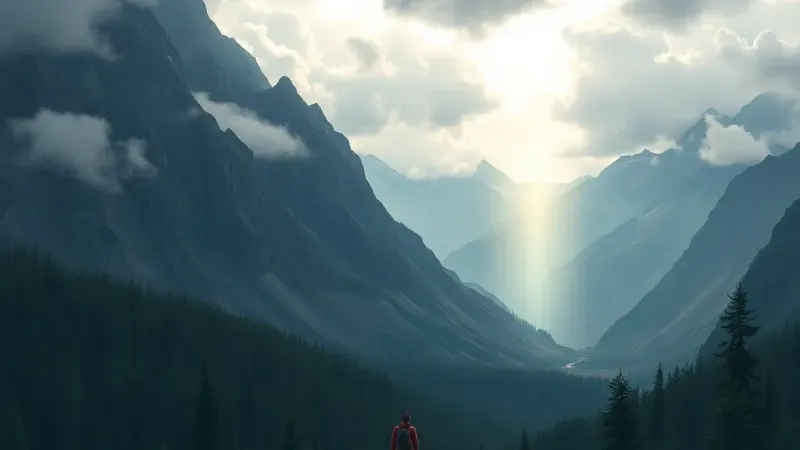
A local resident, Eleanor Vance, 57, has emerged from a harrowing five-day ordeal in the remote Chisos Mountains of West Texas, attributing her survival against increasingly dire circumstances to what she describes as "divine intervention." Vance, an experienced but solo hiker, became disoriented after an unexpected dust storm obscured trail markers last Tuesday, initiating a frantic multi-agency search that captivated the region. Her eventual discovery, weak but alive, in a previously scoured ravine, has been hailed as nothing short of miraculous by rescue personnel.
The search operation, involving teams from the National Park Service, local sheriff's department, and numerous volunteers, spanned over 200 square miles of rugged, arid landscape known for its extreme temperatures and unforgiving terrain. Temperatures soared above 100 degrees Fahrenheit during the day and plummeted into the 40s at night. Vance, equipped with minimal supplies for a day hike, quickly ran out of water. She subsisted on foraged berries and rainwater collected in her emergency poncho, navigating steep canyons and dense scrubland while battling dehydration and growing despair.
Speaking from her hospital bed at St. Jude's Medical Center, Vance recounted moments of profound hopelessness, only to be met with inexplicable shifts in her predicament. "There were times I felt utterly consumed by fear, ready to give up," Vance stated, her voice still hoarse. "But then, a feeling would guide me to a hidden spring, or push me to keep moving just as a search helicopter passed overhead. I know, without a doubt, that I was not alone out there. Something greater was watching over me, steering me away from certain death." She detailed an an instance where a sudden, localized gust of wind blew away thorny bushes, revealing a tiny, trickling stream.
Captain Robert Sterling, incident commander for the Chisos Search and Rescue team, acknowledged the extraordinary nature of Vance's survival. "The odds were stacked heavily against her after the third day," Sterling remarked. "Her discovery point was in an area we had covered, albeit from a distance, due to its inaccessibility. It's a testament to her sheer will and incredible luck." Dr. Julian Hayes, a wilderness survival expert, noted, "Human resilience in extreme conditions can be astonishing. The psychological drive to live, often coupled with unexpected environmental breaks, plays a crucial role."
Vance is currently recovering from severe dehydration, minor injuries, and sun exposure, but doctors expect a full recovery. Her story has resonated deeply within the community, prompting conversations about preparedness for outdoor activities and the powerful role of personal belief in overcoming adversity. Local churches have organized vigils, celebrating her return. Meanwhile, park authorities are reinforcing safety warnings and recommending that all hikers register itineraries and carry satellite communication devices, especially in remote areas.
As Eleanor Vance recuperates, her tale serves as a powerful reminder of both the unforgiving beauty of nature and the enduring human spirit. Whether attributed to sheer grit, fortuitous circumstance, or an intervention beyond comprehension, her emergence from the wilderness provides a compelling narrative of survival against overwhelming odds, leaving many to ponder the forces that shape such extraordinary outcomes.


