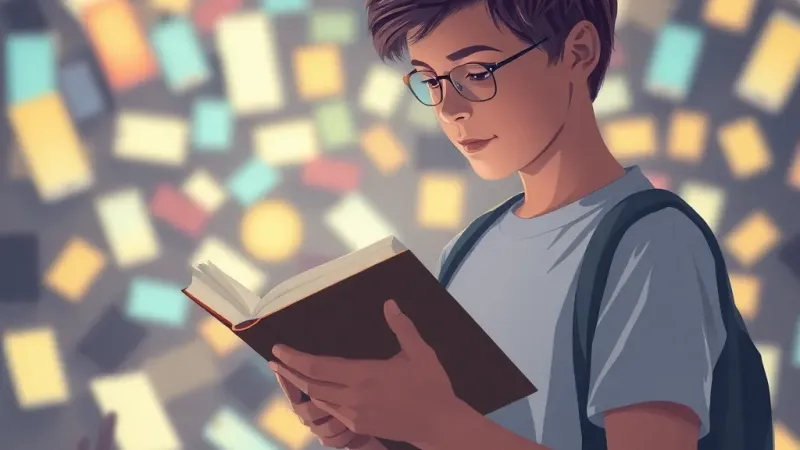
In an era overwhelmingly dominated by glowing screens and fleeting digital content, a 17-year-old student from Edison, New Jersey, is consciously charting a path less scrolled. Emily Carter, a senior at North Edison High, has become a quiet outlier among her Generation Z peers, steadfastly preferring the rustle of paper and the weight of a physical book to the endless scroll of social media or the convenience of an e-reader. Her daily ritual often involves a visit to the local public library, emerging with stacks of novels, biographies, and non-fiction works, a sight increasingly rare for her age group.
Carter's dedication to print media stands in stark contrast to the national average, which shows teenagers spending upwards of seven hours a day on screens, excluding schoolwork. "There's a different kind of connection you make with a physical book," Carter explained in an exclusive interview. "It's not just the story; it's the smell of the paper, the texture of the cover, the ability to physically turn a page. It feels more substantial, more real, and most importantly, it’s completely distraction-free. There are no notifications popping up, no temptation to switch apps." This sentiment resonates with a growing, albeit small, cohort experiencing digital fatigue.
Dr. Eleanor Vance, the venerable Head Librarian at the Edison Township Public Library for over two decades, has observed this nuanced shift. "While the vast majority of our younger patrons still lean heavily on digital resources, we've noticed a distinct uptick in a small segment, like Emily, who are actively seeking out physical books," Dr. Vance stated. "They articulate a desire for deeper concentration, a break from constant connectivity, and the unique sensory experience that only a print book can offer. It's a refreshing return to foundational literacy skills, emphasizing focus and prolonged engagement."
Carter's preference extends beyond mere habit; it is a deliberate choice for enhanced cognitive engagement. Studies have indicated that reading comprehension can be higher with print materials compared to digital texts, attributed partly to the lack of distractions and the consistent spatial memory cues offered by physical pages. "When I'm reading a physical book, I remember more," Carter noted. "I can underline passages, write notes in the margins, and easily flip back and forth to re-read sections. It just feels like a more active and effective way to learn and absorb information."
Her classmates, while often tethered to their own devices, express a mix of admiration and curiosity. Liam Rodriguez, a junior at North Edison High, commented, "Most of us are glued to our phones. It’s cool that Emily sticks to something different. Sometimes I wonder if she's onto something." This burgeoning trend, though not yet widespread, suggests a potential counter-current against the digital deluge, hinting at the enduring power and appeal of the printed word in an increasingly virtual world. As libraries continue to evolve into community hubs, the quiet corners dedicated to print materials may yet see a resurgence, championed by individuals like Emily Carter who champion the timeless act of turning a page.