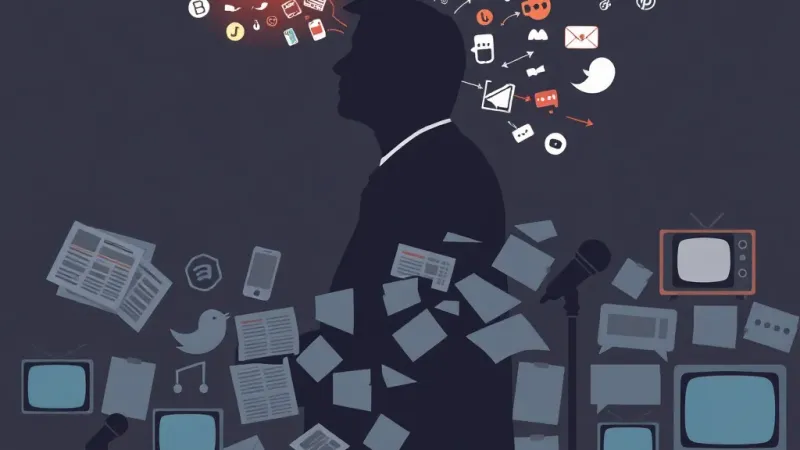
Former President Donald Trump continues to redefine political communication, prioritizing direct engagement with his base and systematically bypassing traditional journalistic gatekeepers. This strategic pivot aligns with recent observations from Arkansas Governor Sarah Huckabee Sanders, who noted a significant and ongoing decline in the influence of legacy news organizations, asserting a palpable erosion of their influence over public discourse.
Trump's approach leverages large-scale rallies, personal social media platforms like Truth Social, and direct email campaigns to disseminate messages unfiltered. This method, meticulously honed during his presidency, allows him to frame narratives and address supporters without the interpretive layer of established newsrooms. Critics contend this contributes to a highly fragmented and polarized information environment, while supporters praise it as a necessary measure against perceived media bias.
Governor Sanders, speaking publicly on the evolving media landscape, underscored a growing public disillusionment with what she termed "legacy outlets." "For too long, these organizations dictated what information reached the public and how it was framed," Sanders stated, a sentiment resonating deeply within conservative circles. "But the power of the gatekeepers is diminishing. People are actively seeking information directly, and they are finding it." Her remarks highlight a broader cultural shift where trust in mainstream media has eroded for significant segments of the population, propelled by accusations of partisan reporting and a perceived disconnect from everyday American concerns.
Dr. Alistair Finch, a seasoned political communications analyst at the independent 'Beacon Research Institute,' commented on the trend. "What we're witnessing is a fundamental restructuring of how political information flows," Finch explained. "The internet has democratized information dissemination, empowering political figures to establish direct pipelines to their audiences. This isn't merely about bypassing unfavorable coverage; it's about owning the narrative from its inception to its reception point." Finch added that while traditional media still possesses unmatched resources for in-depth investigation and reporting, their long-held position as primary interpreters of political events is unequivocally challenged.
The implications of this profound shift are far-reaching, impacting everything from election dynamics to policy formulation. As digital platforms enable more immediate and direct communication, the traditional checks and balances historically provided by an independent press face new complexities. The imperative for public discernment between verified fact and presented opinion grows acutely, demanding a more critical and engaged citizenry capable of navigating a diverse, often polarized, informational ecosystem. This evolving dynamic signals a permanent transformation in how political leaders connect with constituents and how the populace consumes news, ensuring that the battle for public attention will remain fiercely contested on these rapidly shifting digital frontiers.