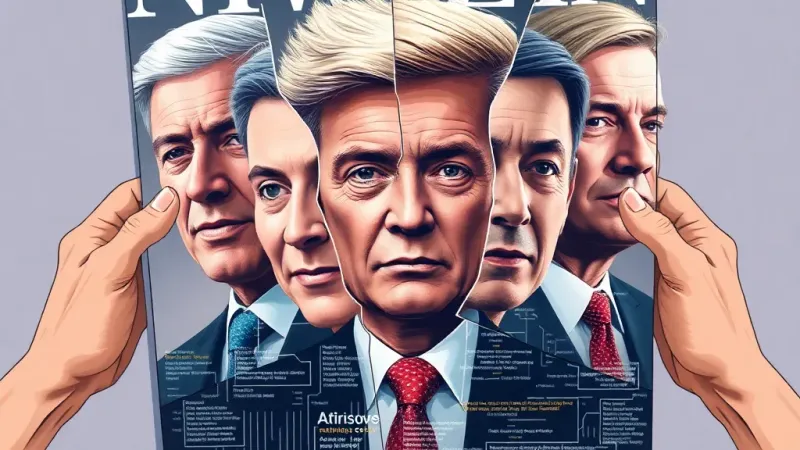
Los Angeles Magazine has found itself at the epicenter of a digital storm following the release of its latest issue, featuring an artificial intelligence-generated cover image depicting the city's mayoral candidates. The controversial May 2024 cover, a digitally synthesized tableau attempting to render a composite of the city's political aspirants, has ignited a fervent backlash across social media platforms and within media industry circles, challenging the publication's artistic judgment and ethical stance on generative AI.
The image, characterized by many as falling squarely into the "uncanny valley," presented a glossy, almost surrealistic interpretation of political figures, triggering immediate and widespread condemnation. Critics swiftly moved to lambast the magazine for its choice, labeling it everything from "lazy" to "tone-deaf" in a city renowned for its human artistic talent and creative industries. The visual dissonance of the AI-created facade, juxtaposed with the complex realities of urban leadership, became a flashpoint for a broader discussion on authenticity and the role of technology in journalism.
Dr. Elias Vance, a prominent digital ethics researcher at the Pacific Institute for Media Studies, voiced his concerns. "This isn't just a poor design choice; it's a symbolic abdication of human creativity in a field that thrives on it," Dr. Vance commented, highlighting the potential implications for artists and designers. "When a major publication opts for AI-generated imagery over human artistry, it sends a troubling message about the value placed on genuine creative work and the livelihoods of those who produce it."
Many long-time readers expressed profound disappointment. Eleanor Finch, a subscriber from Silver Lake for over two decades, articulated a common sentiment: "I follow Los Angeles Magazine for its pulse on the city, its artistry. To see something so jarringly artificial on the cover felt like a betrayal of the magazine's own legacy and the vibrant creative spirit of Los Angeles." Other comments ranged from "so stupid I’m in shock" to calls for the magazine to apologize and commit to using human artists.
In response to the mounting criticism, the publication offered a brief but pointed defense on its official social media channels. "Whether you love it, hate it, question it or can’t stop looking at it… this is the L.A. we’re living in," the magazine stated, implying that the controversial cover was a reflection of the evolving technological landscape rather than an unconsidered design choice. This statement, however, did little to quell the outrage, with many interpreting it as dismissive of legitimate concerns regarding the ethical deployment of AI in creative content.
The incident serves as a stark illustration of the ongoing tension between technological advancement and traditional artistic integrity. As generative AI becomes increasingly sophisticated, media outlets globally are grappling with the opportunities and pitfalls it presents. The Los Angeles Magazine controversy underscores the critical need for transparent policies and careful consideration when integrating AI into public-facing content, particularly in industries where human creativity is not just a commodity but a defining cultural pillar. The debate continues, leaving many to wonder where the line between innovation and artistic responsibility truly lies.