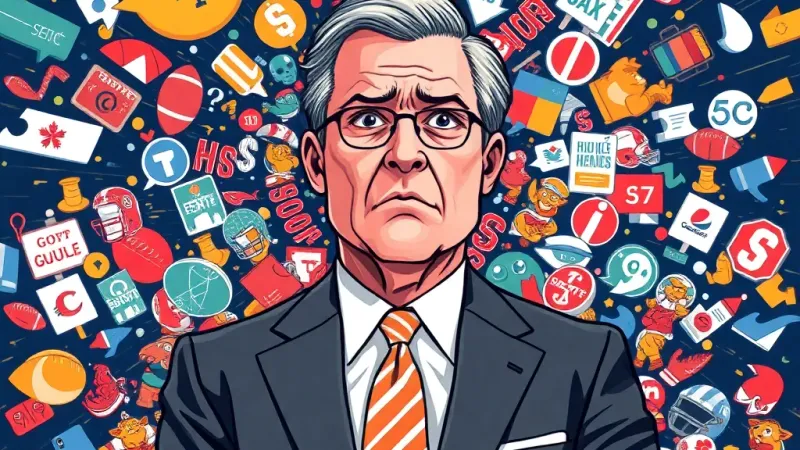
BIRMINGHAM, AL — The typically staid halls of the Southeastern Conference (SEC) were recently rattled not by on-field disputes or contentious officiating calls, but by an extraordinary digital conflict that drew the direct intervention of Commissioner Greg Sankey. What began as lighthearted online banter among rival baseball fan bases during the highly anticipated SEC Baseball Tournament quickly spiraled into an all-out meme war, forcing the conference's top executive to address the burgeoning digital drama. This unusual development underscores the evolving landscape of sports fandom, where virtual battlegrounds now command as much attention as traditional rivalries.
The genesis of the digital skirmish lay in the intense competition among some of the nation's premier college baseball programs. As teams vied for supremacy in Hoover, Alabama, their respective online fan communities engaged in an increasingly aggressive exchange of satirical images and viral videos. Platforms like X (formerly Twitter) and Instagram became ground zero for creative, yet often cutting, digital content. Fans, emboldened by the anonymity of the internet, posted memes ranging from light jabs at opposing mascots to more pointed criticisms of team performance and perceived slights. "It started off harmless, just a bit of fun between rivals," noted Kendra Davies, a longtime fan attending the tournament. "But then you saw some posts that really crossed a line, getting personal and nasty." The sheer volume and intensity of the digital output reached a fever pitch, threatening to overshadow the athletic accomplishments on the diamond.
The escalation did not go unnoticed by conference leadership. Sources within the SEC indicate that an internal review flagged the burgeoning online animosity as a potential distraction and a threat to the conference's image of sportsmanship. On Thursday, Commissioner Sankey, known for his composed demeanor and measured responses, issued a public statement via the official SEC channels. While not explicitly naming the specific memes or incidents, the directive subtly yet firmly reminded fans and institutions alike of the conference's core values: "The Southeastern Conference prides itself on a tradition of competitive excellence and mutual respect," Sankey's statement read, in part. "While passionate support for our institutions is integral to our identity, it is imperative that all engagement, online and off, reflects the decorum and sportsmanship that define the SEC." The statement, disseminated across social media and news outlets, served as an unprecedented acknowledgment of the digital sphere's influence on conference affairs.
Sankey's intervention, a rare move into the often-unregulated world of online fan culture, was met with a mixture of reactions. Many fans lauded the Commissioner for acknowledging the issue and attempting to restore civility. "Someone had to say something," remarked Samuel Chen, a sports ethics analyst. "The digital space can become a free-for-all, and institutions have a role in setting boundaries, even virtually." However, a vocal segment of online users viewed the directive as an overreach, questioning the conference's authority to police fan-generated content. Despite the mixed reception, the direct admonishment from the Commissioner appeared to dampen the intensity of the meme warfare, at least temporarily. The incident serves as a salient reminder for sports organizations worldwide: the passionate, borderless world of online fandom is now an undeniable extension of the competitive arena, demanding new forms of leadership and engagement. The SEC’s unexpected venture into digital diplomacy sets a noteworthy precedent for future challenges in an increasingly interconnected sporting world.