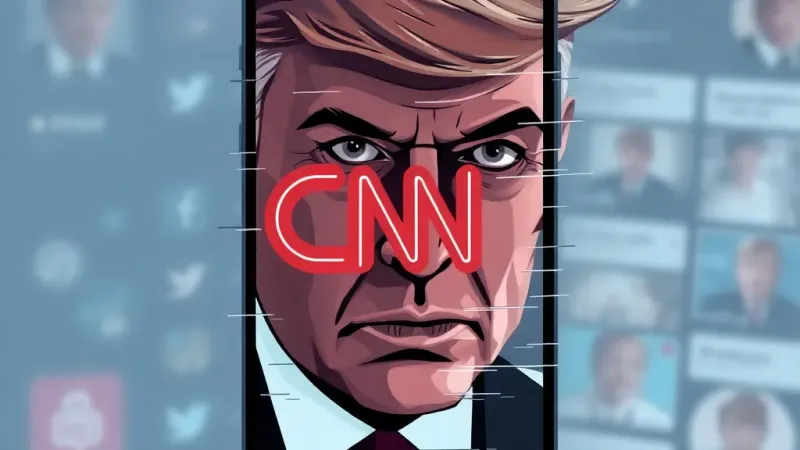
Washington D.C. – A prominent political rapid response operation launched a swift social media offensive this week, deploying a barrage of misleading images purportedly showing CNN anchors "sleeping on air." The coordinated digital broadside from the "Rapid Response 47" account targeted multiple high-profile journalists, coming just hours after CNN published a critical report on the administration's public health response. This visual attack marks a notable escalation in political friction with mainstream media, raising questions about weaponized digital content.
Over a concentrated 30-minute period, the Rapid Response 47 account, known for its fierce loyalty, posted upwards of a dozen stills across various platforms. These images, meticulously curated and often subtly manipulated, featured CNN personalities like Jake Tapper, Dana Bash, and Kate Bolduan. They captured moments of quiet reflection or mid-sentence pauses, deliberately framed to suggest dozing off during live broadcasts. Accompanying captions mocked their professionalism and questioned network credibility, reaching millions.
This rapid-fire digital assault appears direct retaliation for a CNN investigative piece titled "The Administration's Sleepless Nights: Unanswered Questions on Crisis Management." The report meticulously detailed perceived shortcomings in government preparedness and response to recent national challenges, citing anonymous sources. It suggested a disjointed and often lethargic approach, a narrative starkly at odds with the administration's preferred messaging. The timing leaves little doubt as to its retaliatory intent.
Media ethics experts have swiftly condemned the tactic as a dangerous precedent. "This isn't legitimate criticism; it's about sowing distrust through visual deception," stated Dr. Evelyn Reed, a professor of digital media ethics at Sterling University. "By taking moments out of context and presenting them as factual evidence of unprofessionalism, they're undermining journalistic integrity. The goal is to discredit the messenger when the message is inconvenient." Such methods, Dr. Reed noted, often succeed in muddying public discourse.
The incident underscores a growing trend in political communication where social media platforms are leveraged not just for information, but for aggressive attacks on perceived adversaries. This strategy prioritizes quick, visually impactful content designed to go viral, frequently at the expense of accuracy. For CNN, confronting such disinformation campaigns presents a complex challenge, requiring robust fact-checking and clear communication to susceptible audiences.
As the dust settles, implications for media-political relations remain stark. The deployment of misleading imagery to discredit reporting exemplifies a calculated effort to control narratives and cast doubt on legitimate journalism. The episode serves as a powerful reminder of the sophisticated tactics employed in the modern information war, where perception can often override reality, and the battlefield is increasingly on social media.