
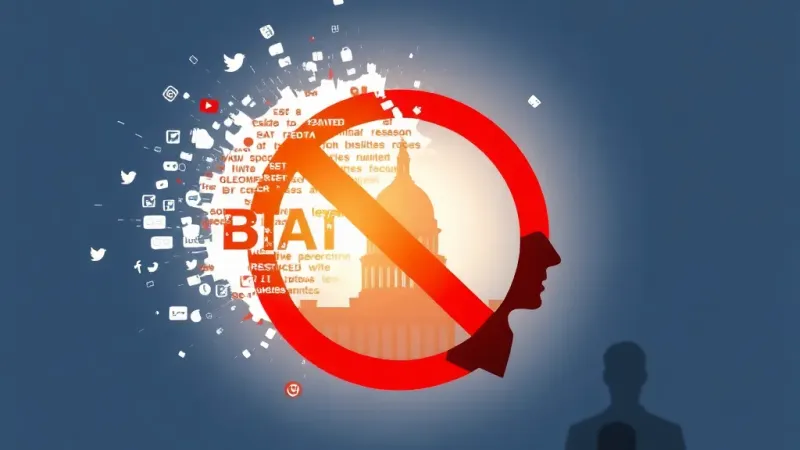
DENVER, CO – In a significant ruling that reaffirms First Amendment protections in the digital age, a Colorado man has been awarded $50,000 by a federal court after a public agency banned him from its social media pages for critical comments. The decision, handed down by the U.S. District Court for the District of Colorado, sends a clear message to government entities nationwide regarding the constitutional limits of online content moderation.
Arthur Finch, a 58-year-old resident of Evergreen, initiated legal action against the Silver Creek Municipal Services Department eighteen months ago, alleging his constitutional rights were violated. Finch had been a regular commenter on the department's official Facebook page, which serves as a primary source of information and community engagement for local residents. His comments, often critical of proposed infrastructure projects and perceived inefficiencies in municipal spending, led to his permanent ban from the page after a series of exchanges that the department deemed "disruptive and non-constructive."
The court found that the Silver Creek Municipal Services Department’s social media page constituted a public forum, thereby obligating the agency to uphold citizens' free speech rights under the First Amendment. Judge Eleanor Vance, presiding over the case, stated in her opinion that "while public agencies retain the right to moderate content for genuine threats or illegal activity, they cannot restrict speech simply because it is critical or expresses dissent against government policies. The digital town square, much like its physical counterpart, must remain open to a diversity of viewpoints."
Attorneys representing Mr. Finch argued that the ban was a textbook example of viewpoint discrimination, designed to silence an outspoken citizen. "Mr. Finch simply wanted to engage with his local government on issues that directly impacted his community," stated his lead counsel, Ms. Lena Marquez. "To be shut out of a crucial public communication channel for expressing dissatisfaction is an egregious overreach and a clear violation of established constitutional principles."
The Silver Creek Municipal Services Department, through its Director of Communications, Ms. Clara Jenkins, expressed disappointment with the verdict, asserting that their intent was to foster a civil and productive online environment. "Our aim has always been to facilitate constructive dialogue and provide accurate information to our constituents," Jenkins commented, "We believed our actions were within reasonable bounds to manage a public forum and prevent it from devolving into a platform for personal attacks or misinformation. We are reviewing the court's decision closely and evaluating our options, including potential appeals, while also assessing necessary revisions to our social media policies."
This ruling is poised to have far-reaching implications for countless government agencies that utilize social media platforms to interact with the public. Legal experts anticipate a surge in policy reviews and potential training for social media managers across municipalities and state departments. Professor Evelyn Reed, a constitutional law specialist at the University of Colorado, noted, "This award serves as a powerful reminder that government's reach on social media is not boundless. Agencies must tread carefully, ensuring their moderation policies protect free speech rather than stifle it. The digital public square is a vital component of modern democracy, and its integrity must be rigorously defended." The decision underscores the evolving legal landscape where traditional constitutional rights extend firmly into the realm of online communication.


