
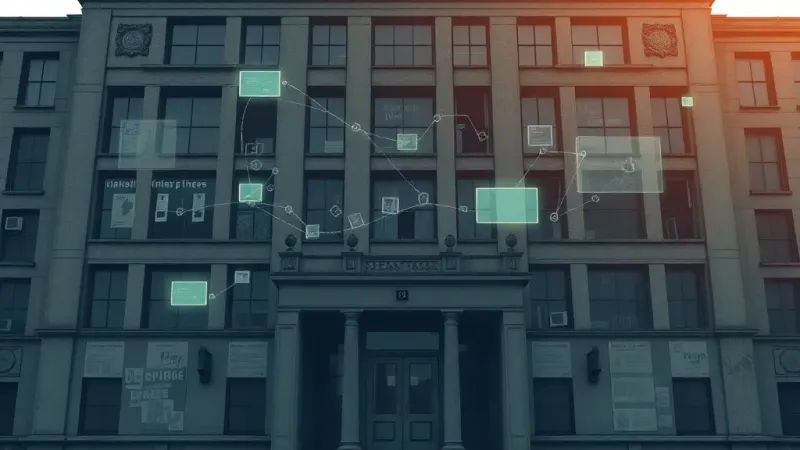
The once-bustling newsroom of the Herald-Times, a cornerstone of local journalism for decades, now stands largely abandoned, its silent presses and empty desks serving as a stark monument to the seismic shifts reshaping traditional print media. Located in Bloomington, Indiana, the decaying facility offers a tangible, if mournful, visual metaphor for an industry grappling with digital transformation and dwindling revenues.
Inside, the silence is profound, broken only by the occasional creak of settling infrastructure. Dust motes dance in shafts of light filtering through grimy windows, illuminating a landscape of forgotten equipment and discarded relics. Stacks of yellowing newspapers, outdated computer monitors, and chairs overturned in haste bear witness to a hurried departure, leaving behind the skeletal remains of what was once a vibrant information hub. The air itself feels heavy with the ghosts of deadlines met, stories broken, and the relentless hum of journalistic endeavor.
For generations, the Herald-Times building was more than just an office; it was the pulse of the community, where reporters chronicled local triumphs and tragedies, editors shaped public discourse, and the daily rhythm of news production unfolded. The scent of ink and paper, the clatter of keyboards, and the urgent ring of telephones were constants, weaving the fabric of civic life through the daily delivery of news to doorsteps across Monroe County. Its physical presence embodied the trustworthiness and immediacy of local reporting.
The decline of the Herald-Times’ physical presence mirrors a nationwide trend. As advertising revenue migrated online and readers increasingly turned to digital platforms for news consumption, many print publications found their traditional business models unsustainable. This shift led to downsizing, consolidation, and, in many cases, the abandonment of long-held physical assets, leaving behind empty shells like the Bloomington edifice.
"It's heartbreaking to see," commented Eleanor Vance, a retired local historian observing the building's current state. "This place was alive. It was where truth was sought, debated, and disseminated. Now it’s a silent reminder of what we’ve lost in terms of a tangible connection to our news." Her sentiment echoes the broader lament for the tangible artifact that a physical newspaper represented, a daily ritual now largely replaced by screen swipes and digital alerts.
The remnants within the building paint a poignant picture: a lone coffee mug still on a desk, a whiteboard with erased story ideas, and tangled cables snaking across the floor where servers once hummed. These aren't just remnants; they are archaeological finds of a bygone era, each whispering tales of the dedicated professionals who once filled these halls, racing against the clock to inform their community. The printing presses, once roaring behemoths, stand inert and imposing, their immense gears caked with dust, never again to churn out the day's headlines.
While journalism continues in new forms, the vacant Herald-Times building stands as a stark, almost poetic, memorial to the print era’s grandeur and its inevitable retreat. It’s a powerful visual testament to the continuous evolution of media, reminding us that even the most enduring institutions can become relics in the march of progress.