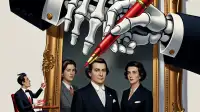

Veteran tech journalist Eleanor Vance, a luminary whose insights have graced the pages of the *Digital Chronicle* for over two decades, has issued a definitive stance against the burgeoning trend of AI-generated news. In a widely disseminated editorial published Tuesday, Vance declared her unwavering commitment to human-authored content, marking a pivotal moment in the ongoing debate surrounding artificial intelligence's role in media. Her declaration, which posits a fundamental incompatibility between journalistic integrity and algorithmic composition, has sent ripples through newsrooms and tech companies alike.
Vance’s editorial, titled "The Unseen Hand," meticulously detailed her objections. She articulated concerns not merely about factual accuracy, which she acknowledges AI can often achieve, but about the nuanced layers of human perspective, ethical judgment, and investigative depth that she argues are inimitable by machine. "Journalism is an act of human empathy, curiosity, and critical thought," Vance wrote. "It is a conversation between storyteller and audience, a trust built on shared humanity. When we outsource this to an algorithm, we don't just lose a voice; we lose the soul of the narrative itself, sacrificing authenticity for efficiency." She highlighted potential pitfalls, including the propagation of biases embedded in training data and the obfuscation of accountability when errors occur.
The move comes as numerous media outlets globally experiment with AI tools for everything from compiling market reports to drafting preliminary news summaries. Proponents argue that AI can free up human journalists for more complex investigative work, enhance speed, and personalize content delivery. However, critics like Vance contend that the pursuit of speed and scale risks diluting the essence of what makes journalism a vital societal function. This debate escalated recently following several high-profile incidents where AI-generated content contained factual inaccuracies or exhibited inappropriate tonal characteristics, further fueling skepticism among readers and practitioners alike.
Vance's pronouncement has drawn both fervent praise and cautious critique. Many veteran journalists have lauded her for articulating a sentiment widely felt but rarely voiced so definitively. Conversely, some forward-thinking editors exploring hybrid models express concern that such a rigid stance might impede innovation. Clara Beaumont, Managing Editor at the online tech publication *Future Bytes*, offered a nuanced perspective. "While Ms. Vance's dedication to human-centric journalism is commendable, we believe there's a valuable place for AI as a supportive tool," Beaumont stated in an internal memo. "Our focus is on leveraging AI to augment human capabilities, not replace them. The challenge lies in defining clear ethical guardrails."
The *Digital Chronicle*'s decision to formally endorse Vance's position by committing to exclusively human-penned news articles sets a precedent that could force other publications to re-evaluate their AI strategies. As artificial intelligence continues its rapid advancement, the media industry faces a critical juncture: how to harness technological progress without compromising the foundational principles of trust and truth-telling. Vance's stand serves as a stark reminder that while technology evolves, the human element of storytelling remains paramount.