
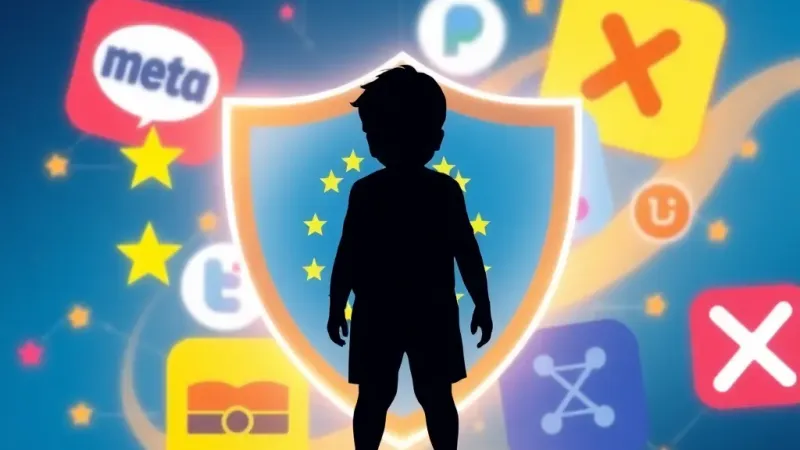
The European Commission is preparing to roll out a comprehensive suite of new child protection rules aimed directly at the digital behemoths of social media: TikTok, Meta Platforms (parent company of Facebook and Instagram), and X (formerly Twitter). This significant regulatory push, operating under the robust framework of the Digital Services Act (DSA), seeks to erect robust safeguards around young users, shielding them from the myriad of online dangers that have proliferated across these widely accessed platforms. The initiative underscores a growing international urgency to mitigate the adverse effects of digital environments on minors.
Concerns have mounted over recent years regarding the pervasive influence of social media on the mental health and developmental well-being of children and adolescents. Critics point to algorithmic designs that can foster addictive behaviors, exposure to inappropriate or harmful content, and the insidious rise of cyberbullying. These new directives are expected to mandate more rigorous age verification mechanisms, enforce stricter content moderation tailored for younger audiences, and impose significant restrictions on targeted advertising practices that exploit children's data and vulnerabilities. The overarching goal is to transform the digital landscape into a safer space for its youngest participants.
European officials are reportedly scrutinizing the internal design choices and data handling practices of these platforms. Specific attention is being paid to how algorithms recommend content to minors and the default privacy settings offered to young users. For instance, the Commission is expected to demand greater transparency from platforms regarding their data processing for children and to ensure that privacy-by-design principles are inherently integrated into their services. The sheer scale of engagement, with millions of European children routinely interacting with TikTok, Instagram, and X, amplifies the necessity and potential impact of these forthcoming regulations.
Compliance presents a substantial challenge for these multi-billion-dollar corporations. Implementing advanced age-verification systems while respecting privacy rights, retraining moderation teams to discern nuanced harm, and redesigning advertising infrastructure are complex and costly endeavors. However, the DSA carries the weight of significant financial penalties – up to 6% of a company’s global annual turnover – for non-compliance, providing a formidable incentive for tech giants to adapt their operations. "This isn't merely a suggestion; it's a legal imperative," stated Elara Vance, a spokesperson for the European Digital Childhood Initiative, emphasizing the binding nature of the upcoming rules. "Platforms must prioritize child safety over engagement metrics."
The EU's proactive stance is not merely a regional effort but often sets a global precedent. Similar to how the General Data Protection Regulation (GDPR) influenced privacy laws worldwide, these child protection measures could inspire other jurisdictions to follow suit, further solidifying the bloc's position as a leading digital regulator. The success of this initiative will hinge on the intricate details of its implementation, the technological adaptability of the platforms, and the Commission's unwavering commitment to enforcement, ultimately shaping the future of digital interaction for an entire generation.


