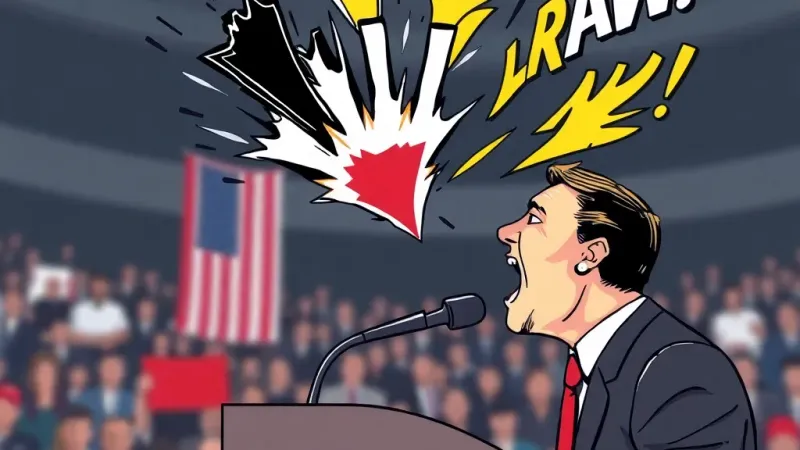
Democrats are fundamentally altering their rhetorical strategy in the current election cycle, consciously embracing a more direct and often profane lexicon across their campaign operations. From raucous rallies to ubiquitous social media posts and targeted fundraising emails, a discernible shift away from traditional political decorum is evident, marking a stark departure from past campaign playbooks. This deliberate pivot reflects a perceived urgency within the party to convey raw emotion and an unfiltered sense of outrage, aiming to resonate with an electorate increasingly frustrated by perceived political stagnation and ideological clashes. The strategic deployment of language previously confined to private conversations is now a public staple, reshaping the boundaries of acceptable political discourse.
This linguistic evolution is not accidental; it is a calculated tactic. Campaign strategists are increasingly advising candidates to shed polished rhetoric in favor of authenticity, believing that unvarnished expressions can cut through the noise and demonstrate a genuine connection with voters. Online, particularly on platforms like X (formerly Twitter) and TikTok, the use of expletives has become a viral currency, generating engagement and signaling a no-holds-barred approach to political combat. During live speeches, what once might have been a slip of the tongue is now often a deliberate choice, eliciting cheers and applause from a galvanized base eager for leaders who speak their minds without reservation. Fundraising appeals, too, have adopted this sharper tone, employing blunt language to underscore the stakes and spur immediate action from donors.
"We're past the point of polite euphemisms," stated Eleanor Vance, a veteran Democratic campaign strategist, in a recent interview. "Voters, especially younger ones, are tired of political doublespeak. When you're trying to communicate the gravity of certain issues, sometimes only a four-letter word truly captures the raw emotion and urgency. It shows we're just as fed up as they are." This sentiment is echoed by grassroots organizers like Marcus Thorne in Toledo, who noted, "Our community isn't looking for flowery speeches. They want to know you understand their anger, their frustration. When a candidate drops an f-bomb, it's not about being crude; it's about being real. It humanizes them and cuts through the cynicism."
However, this aggressive linguistic strategy is not without its critics, even within Democratic circles. Some fear that embracing such language could alienate moderate voters or those who still value traditional civility in public discourse. "While authenticity is important, there's a fine line between relatable and unprofessional," cautioned Dr. Evelyn Reed, a political communications expert. "The risk is that it might be perceived as a lack of seriousness or an inability to articulate a complex argument without resorting to shock value, potentially undermining the very authority these campaigns seek to project." Concerns also exist that it could further polarize the political landscape, contributing to an overall coarsening of public debate rather than fostering constructive dialogue.
As the election intensifies, the prevalence of this sharper rhetorical edge is poised to redefine political communication. Whether this strategic deployment of unreserved language will ultimately broaden appeal or merely deepen partisan divides remains a critical question. What is clear is that the Democratic Party is signaling a new era of communication, one where authenticity is prioritized, and traditional barriers to public expression are being systematically dismantled in pursuit of political resonance. The impact on voter engagement, campaign finance, and the broader cultural conversation around politics will be closely watched as this election cycle unfolds.