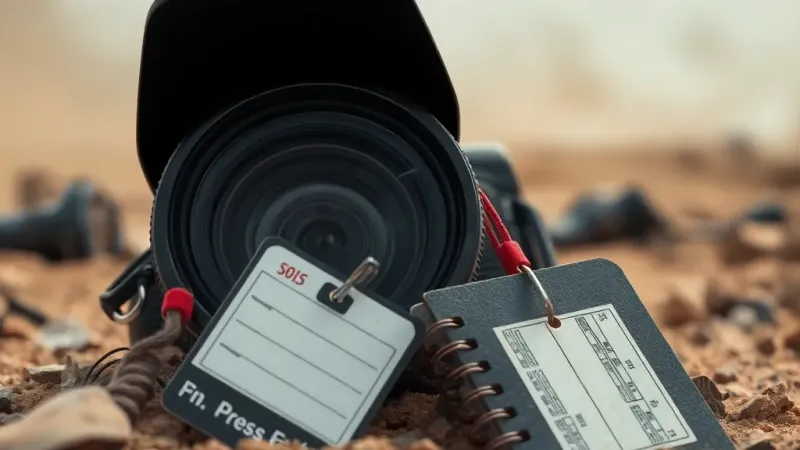
A journalist working for Al Jazeera was tragically killed on Thursday, November 9th, in an Israeli airstrike in the central Gaza Strip, prompting immediate and forceful condemnation from the Qatar-based news network. Malik Hassan, a veteran cameraman, was reportedly targeted while reporting from an area near Khan Younis, alongside a fellow journalist who was also injured. This incident marks another devastating blow to media professionals, bringing renewed focus to the dangers inherent in documenting ongoing hostilities.
Al Jazeera swiftly released a statement following Hassan's death, accusing the Israeli military of deliberately targeting its crews. The network decried the killing as an "assassination" and a "flagrant violation of international laws," vowing to pursue all legal avenues for justice. Footage broadcast by Al Jazeera showed the immediate aftermath of the strike, with emergency services attending to the scene. The vehicle, clearly marked as a press car, sustained significant damage.
The fatality has reignited urgent calls from international press freedom organizations for greater protection for journalists covering the intense hostilities in Gaza. Groups like Reporters Without Borders and the Committee to Protect Journalists have highlighted the extreme dangers faced by reporters, with an unprecedented number killed since the conflict escalated on October 7th. The United Nations has also expressed deep concern over mounting civilian casualties, including media workers, underscoring the need for accountability.
The Israeli military has yet to issue specific comment regarding the incident involving Hassan. Typically, they state that extensive precautions are taken to avoid harming non-combatants and that strikes target Hamas operational infrastructure. However, the recurring pattern of journalists being caught in or directly affected by military operations has led to widespread skepticism and demands for independent investigations. Critics argue that current rules of engagement inadequately protect media personnel.
"Every time a colleague falls, a piece of our collective truth-telling capacity dies with them," stated Dr. Elias Vance, a senior researcher at the Institute for Global Media Ethics. "The risks journalists take to bear witness are immense, and when those risks become fatal under suspicious circumstances, it erodes trust and undermines the fundamental principles of a free press. This isn't just about one journalist; it's about the world's ability to understand what is truly happening."
The latest death intensifies scrutiny on the conduct of military operations in Gaza and the responsibility of all parties to ensure journalist safety. As the conflict continues to rage, the international community faces increasing pressure to uphold the rights and protections afforded to media workers under international humanitarian law, ensuring they can perform their vital role without fear for their lives. The incident underscores the profound and tragic cost of documenting conflict.