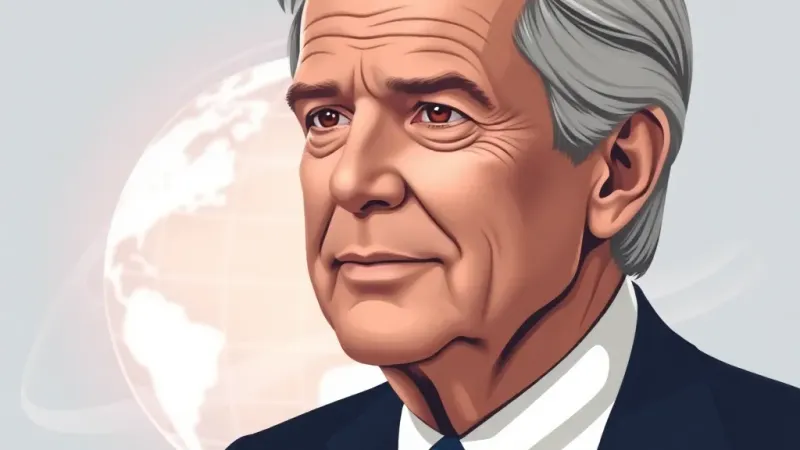
Ted Turner, the visionary founder of the Cable News Network (CNN), passed away today at the age of 85, leaving behind a monumental legacy that forever reshaped global journalism. The audacious entrepreneur, often called the 'Mouth of the South,' died peacefully at his Montana ranch, confirmed by a family spokesperson.
In 1980, Turner launched CNN, an unprecedented 24-hour news channel that many critics initially dismissed as a folly. Against all odds, it quickly became a staple, providing continuous coverage of world events and fundamentally altering how news was consumed. From the Challenger disaster to the Persian Gulf War, CNN’s live, unblinking eye on unfolding history proved its critics wrong and established the blueprint for modern news cycles, forcing traditional broadcasters to adapt.
But Turner’s influence extended far beyond the cable news giant. He founded Turner Broadcasting System, which included popular channels like TBS and TNT, and pioneered the concept of superstations. His entrepreneurial drive also led to the creation of the Goodwill Games in 1986, an international multi-sport event aimed at easing Cold War tensions, and later, the establishment of the United Nations Foundation, to which he famously pledged $1 billion.
Tributes from across the media landscape and beyond have poured in, honoring a figure described as both fearless and fiercely independent. 'Turner didn't just build a channel; he built an entirely new concept of information dissemination that forced every other network to adapt,' commented Eleanor Vance, a veteran media analyst and author. 'He saw the future of news before anyone else, and he wasn't afraid to bet everything on it.'
Julian Thorne, who worked alongside Turner during CNN's nascent years, reflected on his former boss's unique drive. 'He was relentless, unconventional, and had this uncanny ability to see the future of news. His energy was infectious, pushing everyone around him to think bigger, bolder,' Thorne stated in an interview this afternoon. 'He demanded excellence and authenticity, traits that defined CNN’s early identity.'
While known for his outspoken nature and sometimes controversial pronouncements, Turner’s unwavering commitment to objective, global reporting and his philanthropic endeavors cemented his status as a titan of the 20th century. His later years saw him advocate passionately for environmental conservation and nuclear disarmament, causes he championed with the same zeal he brought to media innovation. The media landscape, from how we receive breaking news to the very structure of global broadcast, bears the indelible mark of Ted Turner’s extraordinary vision. He leaves behind a legacy of innovation, daring, and a relentless pursuit of what he believed was possible for a connected world.