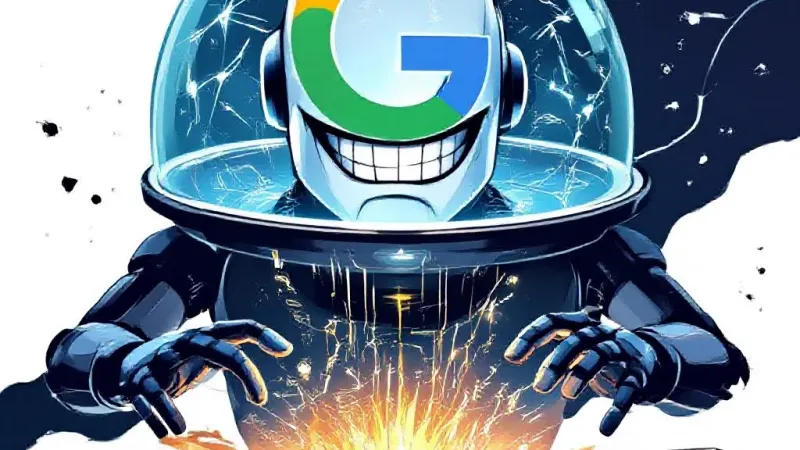
At its recent I/O developer conference, Google unveiled a suite of new AI features designed to streamline the user experience, often at the expense of the open web it purports to champion. Among the most salient additions were AI Overviews directly within search results, the integration of Gemini AI into Gmail for summarization, and AI-generated summaries for YouTube videos. These developments represent not a new direction, but a significant acceleration of Google's multi-decade project to re-intermediate content, consolidating user attention within its ecosystem while subtly, but effectively, bypassing original creators.
The dynamic between platforms and publishers has long been a strained one. For years, content creators have operated under the implicit agreement that, in exchange for relinquishing some control and data to search engines and social media, they would receive traffic, and consequently, advertising revenue. However, as Google has progressively offered more direct answers, snippets, and now AI-generated summaries, the 'click-through' has become an increasingly optional step in the user journey. The introduction of AI agents capable of summarizing emails and lengthy video content within Google's own applications further exacerbates this pre-existing tension.
The promise of the open web was always one of discovery and direct access to diverse sources. Yet, as platforms like Google perfect the art of extracting and re-presenting information without requiring a visit to the source, that promise becomes increasingly theoretical. Why navigate to a news site, read an article, or watch a full video when an AI can deliver the perceived essence directly in your inbox or search results?
This shift positions content producers as mere raw material providers for algorithmic distillation. Their intellectual property, created through investment in reporting, research, and production, is consumed, processed, and then presented in a format that often negates the need for direct engagement with the original work. The economic implications are stark: reduced traffic translates directly into reduced advertising revenue, further imperiling an already fragile media ecosystem.
While Google executives might frame these features as efficiencies for the user, the underlying reality is a further solidification of platform power. Publishers are left in a difficult position: their content is essential for training and populating these AI tools, yet the same tools are designed to divert attention and value away from them. The internet increasingly functions not as a network of destinations, but as a vast quarry of information from which Google extracts and refines its product, leaving content creators to wonder what, if anything, remains for them.