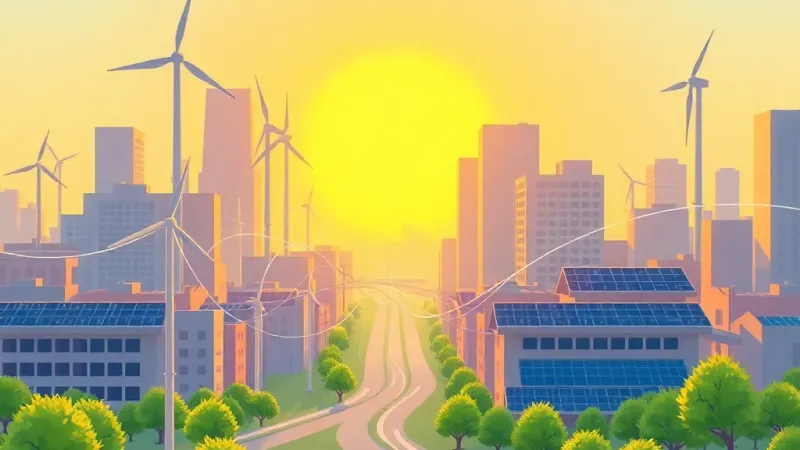
A paradigm shift in energy forecasting suggests that a fully decarbonized, round-the-clock power grid, supplied entirely by renewable sources, is not a distant dream but a rapidly approaching reality. Recent studies and ongoing technological innovations are challenging previous timelines, pointing to a future where continuous green energy could power homes and industries far sooner than conventional estimates, potentially within the next two decades for some advanced economies. This optimistic outlook marks a significant departure from earlier, more conservative projections.
The core of this accelerated timeline lies in synergistic advancements across multiple fronts. Significant breakthroughs in battery storage technology, particularly for large-scale grid applications, are fundamentally addressing the intermittency challenges traditionally associated with solar and wind power. Beyond lithium-ion, emerging technologies like flow batteries, compressed air energy storage, and enhanced pumped hydro are expanding the toolkit for storing surplus energy. Alongside improved storage, sophisticated artificial intelligence and machine learning algorithms are profoundly enhancing grid management, enabling more precise, real-time forecasting of renewable output and dynamic demand response. This allows for seamless balancing of supply and demand, mitigating fluctuations inherent to weather-dependent generation.
Furthermore, the diversification of renewable energy portfolios plays a critical role in bolstering grid reliability. While solar photovoltaics and wind turbines remain central to the global energy transition, the growing viability of dispatchable complementary sources is crucial. Advanced geothermal systems, capable of providing constant baseload power, are seeing renewed investment and technological advancements. Enhanced hydropower, often coupled with modernizing existing facilities, also offers flexible generation capacity. This holistic approach ensures a robust and resilient energy mix, capable of delivering a steady power supply even during prolonged periods of low sunlight or wind, thus eliminating the need for fossil fuel backups.
The decreasing cost of renewable energy generation, coupled with robust governmental incentives and unprecedented private sector investment, is further fueling this rapid transition. What was once considered a prohibitively expensive endeavor is now becoming economically competitive, making large-scale renewable deployment increasingly attractive to utilities and governments worldwide. Grid modernization, including the digitalization of transmission and distribution infrastructure, is also paving the way for more efficient integration of these distributed energy resources.
"For years, the prospect of 24/7 renewables was often viewed through the lens of cautious, long-term ambition," commented Dr. Aris Thorne, a lead energy systems analyst at the fictional Global Energy Futures Institute. "But the collective momentum from technological leaps in storage, predictive analytics, and diversified clean energy portfolios has been nothing short of transformative. We're witnessing a fundamental reassessment of what's achievable, and crucially, how quickly."
While the path forward is clearer, significant challenges remain. Scaling infrastructure to integrate a vast array of renewable sources, upgrading aging transmission lines, and navigating complex regulatory landscapes will require sustained international collaboration and substantial capital investment. However, experts believe these hurdles are surmountable given the current technological trajectory and the urgent imperative of global climate action. The vision of a planet powered by an uninterrupted flow of clean energy is no longer a question of "if," but increasingly, "when," with that "when" arriving sooner than many anticipated.