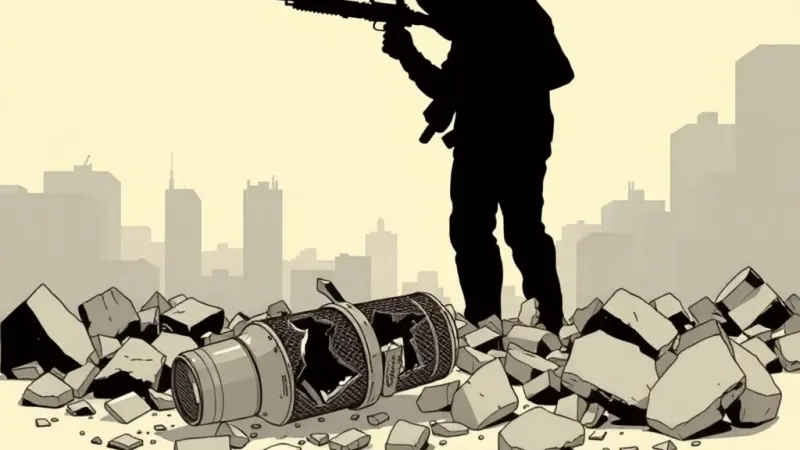
Haiti's media landscape is collapsing under the relentless pressure of escalating gang violence, with numerous newsrooms shuttered and journalists forced into hiding or exile. The once vibrant press is now a ghost of its former self, struggling to report on a nation increasingly swallowed by lawlessness and fear.
In Port-au-Prince and surrounding areas, the dominion of armed groups has rendered traditional journalism nearly impossible. At least 15 radio stations and several television networks have ceased operations since early 2023, unable to guarantee the safety of their staff or equipment. Journalists are caught between the dangers of reporting from gang-controlled zones and the risk of being targeted for their work. The capital's Cité Soleil, for instance, has become an informational black hole, with local reporters unable to safely enter or transmit dispatches.
The threats are multifaceted: direct assaults, kidnappings for ransom, the destruction of broadcast infrastructure, and brutal assassinations. "The fear is palpable every single day," stated Ms. Elodie Renard, a veteran radio journalist who recently fled her home in Delmas. "We cannot distinguish between a regular citizen and a target anymore. Every street corner is a potential ambush." Her newsroom, Radio Lumière, shuttered last month after repeated threats and the kidnapping of two technical staff members.
This systematic dismantling of the media has dire consequences for Haiti's 11 million citizens. Without reliable news, communities are left vulnerable to misinformation, propaganda, and rumors, further eroding public trust and civic engagement. Crucial information on public safety, government actions, and humanitarian needs struggles to reach those who need it most. Mr. Jean-Luc Dubois, director of the shuttered *Le Nouveau Réveil* newspaper, lamented, "When the press falls silent, democracy dies. Our people are being robbed not just of their security, but of their right to know what is happening in their own country."
The crisis in media mirrors the broader governmental and security breakdown across Haiti. Gangs now control an estimated 80% of Port-au-Prince, dictating movement, commerce, and daily life. This unchecked power has created an environment where independent reporting is viewed as a threat to their authority, leading to aggressive suppression. Over the past 18 months, reports indicate at least 12 journalists have been killed, and countless others have been internally displaced or forced to seek asylum abroad, according to a fictional media watchdog group called "Haiti Press Freedom Watch."
The ongoing erosion of Haiti’s media infrastructure represents a catastrophic loss for a nation already grappling with profound instability. As newsrooms remain dark and journalistic voices are suppressed, the prospect of an informed populace capable of navigating the crisis dwindles, leaving a void that threatens to deepen Haiti's ongoing descent into chaos. Urgent international support and a restoration of security are critical to revive the nation's dying press.