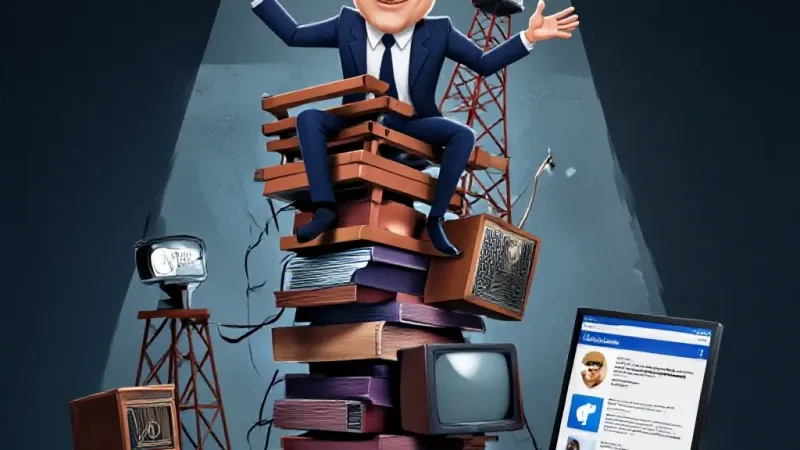
The act of reviewing digital history often serves less as a nostalgic exercise and more as a stark demonstration of recurring patterns. A recent historical retrospective, tracing specific weeks across 2006, 2011, and 2016, inadvertently highlights the unwavering consistency of power dynamics between information platforms and the publishers whose content fuels them. The players evolve, the technologies shift, but the core mechanics of value extraction and control remain remarkably constant.
In 2006, the nascent digital media landscape was grappling with fundamental questions of intellectual property in an era of unprecedented sharing. Debates raged over copyright enforcement, the viability of online advertising models, and the very definition of "fair use" as platforms began aggregating and distributing content at scale. Publishers, many still tethered to print revenue, cautiously experimented with online presence, often underestimating the transformative, and ultimately, centralizing power of the emerging internet gatekeepers. The seeds of dependency were quietly sown as traffic metrics began to dictate strategy.
By 2011, the ascent of social media had cemented new intermediaries between content creators and their audiences. Platforms like Facebook and Twitter were rapidly becoming indispensable distribution channels, offering reach that traditional media struggled to replicate. The bargain was deceptively simple: publishers received "free" traffic, while platforms accrued user data and advertising revenue derived from that very engagement. This period saw the accelerating shift of ad dollars away from content creators and towards the platforms, even as publishers were urged to "meet users where they are" – a polite instruction to surrender control.
Fast forward to 2016, and the consequences of this arrangement were fully manifest. Publishers were caught in an algorithmic vise, constantly adjusting editorial strategies to appease platform-mandated shifts, from the "pivot to video" to ever-changing news feed prioritization. The promise of direct audience relationships withered under the platforms' opaque algorithms. This was also the year anxieties over misinformation and platform responsibility began to escalate, even as platforms continued to profit handsomely from the attention economy they had so effectively monopolized. The media industry, having largely divested from its own distribution, found itself tethered to the whims of algorithms, often facing dire financial consequences.
Today, in an era of generative AI and continued platform consolidation, these historical echoes are louder than ever. AI models "training" on copyrighted content without explicit consent or equitable compensation is merely the latest iteration of value extraction. Platforms continue to de-prioritize news content while simultaneously demanding licensing deals for that same content, solidifying their negotiating leverage. The narrative changes, the technologies are new, but the fundamental struggle for control, revenue, and audience attention between platforms and the news industry remains an enduring, and historically predictable, cycle.