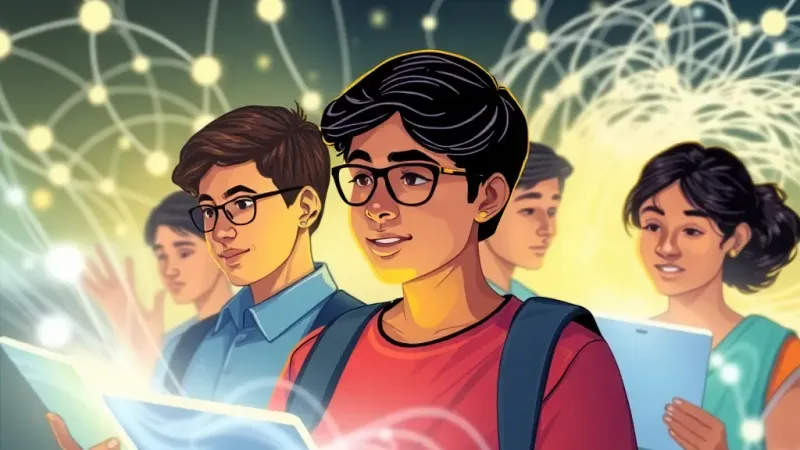
New Delhi, India — In a pivotal move to fortify its younger generation against the complexities of the digital landscape, India is embarking on a comprehensive initiative to integrate Media and Information Literacy (MIL) into its national education system. Led by UNESCO, this ambitious undertaking aims to equip students with the critical thinking skills necessary to navigate an increasingly interconnected world, combat misinformation, and foster responsible digital citizenship. The program, developed in collaboration with key Indian educational stakeholders, marks a significant step towards preparing future citizens for informed participation in a globally networked society.
The urgency for MIL integration stems from the proliferation of digital platforms and the accompanying challenges of misinformation, disinformation, and echo chambers. As internet penetration deepens across India, students are exposed to vast amounts of information, much of it unverified or intentionally misleading. Without the tools to critically evaluate sources, discern bias, and understand media production, this generation risks being ill-prepared to make sound decisions or contribute meaningfully to public discourse. This initiative recognizes that digital access alone is insufficient; critical digital literacy is paramount.
UNESCO is working closely with the National Council of Educational Research and Training (NCERT), among other national bodies, to develop a robust framework for MIL integration. This involves crafting age-appropriate curriculum modules, creating educational resources, and, critically, implementing extensive teacher training programs. Educators will be empowered to impart these essential competencies, transforming classrooms into hubs where students can learn to analyze media messages, identify propaganda, and understand their rights and responsibilities online. Pilot programs are anticipated to roll out in select regions, allowing for refinement before a broader national implementation.
The long-term vision extends beyond the classroom. By embedding MIL across various educational levels, India aims to cultivate a population that is not only digitally literate but also resilient to manipulation and capable of fostering a more democratic and inclusive online environment. This holistic approach envisions a generation that can distinguish credible news from fabricated content, respect intellectual property, and contribute positively to digital communities. It is a strategic investment in the nation’s future, ensuring its youth are not merely consumers of information but discerning, ethical participants in the global digital conversation.
"In an era where information flows unceasingly, the ability to critically assess, analyze, and ethically engage with media is as fundamental as reading and writing," stated Dr. Alisha Sharma, a leading educational policy analyst affiliated with the initiative. "This national push for Media and Information Literacy is not just about technology; it's about nurturing informed citizens who can uphold democratic values and build a more resilient society." The successful integration of MIL is poised to reshape educational paradigms in India, providing a powerful model for other nations grappling with similar challenges in the digital age.