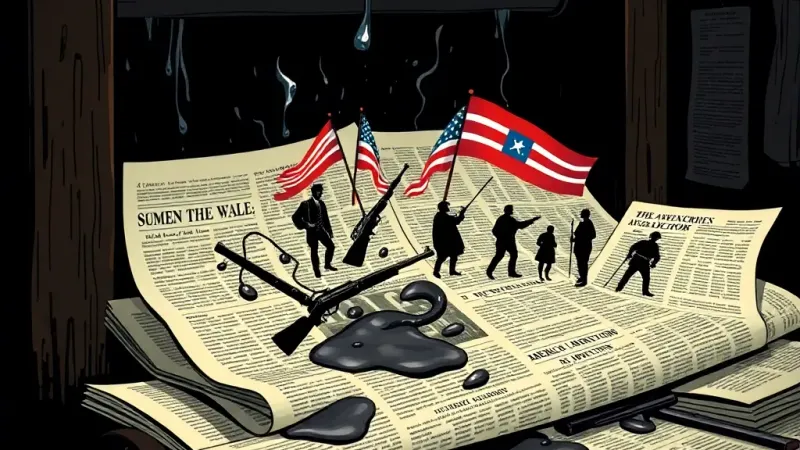
Morristown, NJ – The pivotal, often perilous, role of journalism in igniting and sustaining the American Revolution will be the focus of a special presentation at the Morris Museum on Sunday, June 9. Dr. Elias Thorne, a distinguished Professor of Early American History from Sterling College, will unravel how the colonial press transformed from a scattered collection of newsletters into a potent instrument of rebellion, shaping public opinion and galvanizing a nascent nation towards independence.
Before the age of mass media, pamphlets, broadsides, and nascent newspapers served as the primary conduits for revolutionary thought, circulating ideas that challenged monarchical rule and championed self-governance. Dr. Thorne's lecture, titled "Ink and Independence: The Fourth Estate's Founding Role," will delve into how figures like Thomas Paine and Benjamin Franklin leveraged the printing press to disseminate radical concepts, turning local grievances into a unified colonial resistance. The very act of publishing dissenting opinions was fraught with danger, with printers facing charges of sedition and personal threats from British authorities and loyalist factions.
The presentation is scheduled for 2:00 PM in the museum’s Bickford Theatre. Attendees are encouraged to register in advance, with tickets priced at $10 for non-members and free for museum members. 'Understanding the revolutionary press isn't just about history; it's about appreciating the foundational power of informed discourse,' stated Ms. Clara Vance, Chief Historian at the Morris Museum. 'Dr. Thorne’s insights will illuminate how carefully crafted words and widespread distribution laid the ideological groundwork for a republic, underscoring the enduring significance of a free press.'
From Boston’s fiery *Massachusetts Spy* to Philadelphia’s influential *Pennsylvania Gazette*, these publications served not merely as news bulletins but as vital forums for political debate, propaganda, and calls to action. They carried searing essays, satirical cartoons, and reports of colonial injustices, often under pseudonyms to protect their authors. This network of printers and writers, operating with a shared sense of purpose, created a revolutionary echo chamber that amplified grievances and forged a collective identity among disparate colonies, paving the way for the Continental Congress and ultimately, the Declaration of Independence.
Dr. Thorne is expected to highlight specific examples of persuasive journalism, such as Paine’s *Common Sense*, which sold an unprecedented 120,000 copies in its first three months, swaying countless wavering colonists towards the cause of liberty. His lecture will draw parallels between the challenges faced by early American journalists and the contemporary responsibilities of media in a democratic society, reminding audiences that the principles of a free and vigilant press are as crucial today as they were over two centuries ago. The event offers a unique opportunity to reflect on the bedrock role of communication in the birth of a nation.