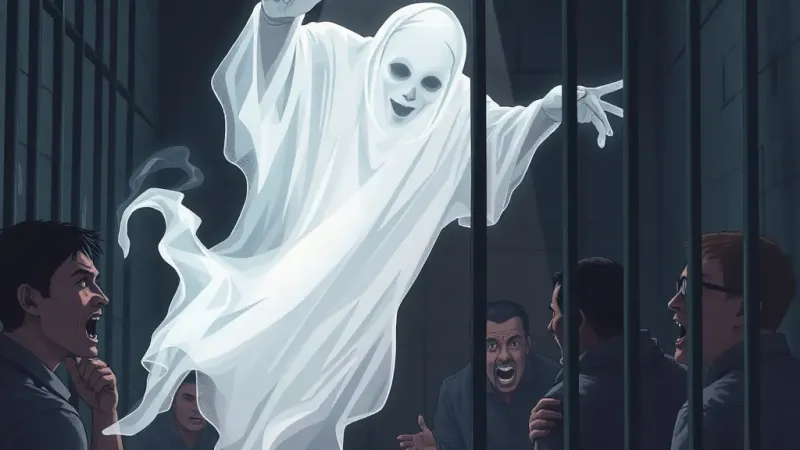
Director Joko Anwar, a name synonymous with visionary horror, has once again pushed cinematic boundaries with his latest offering, 'Ghost in the Cell.' This audacious prison horror comedy, now captivating audiences across the region, masterfully intertwines supernatural dread with sharp, biting satire. Critics are hailing the film as a groundbreaking achievement, noted for its innovative 'Zen sets,' the undeniable chemistry of its ensemble cast, and a narrative that unspools with both chilling suspense and uproarious humor. The film’s premiere marked a significant moment for the genre, proving that the confines of a correctional facility can be a stage for both existential terror and profound societal commentary.
The visual language of 'Ghost in the Cell' is immediately striking, largely due to its unconventional 'Zen sets.' Rather than depicting the grime and grit typically associated with incarceration, Anwar presents a stark, almost sterile environment within the fictional 'Harmony Correctional Facility.' Immaculate white walls, minimalist cell designs, and an unsettlingly serene courtyard belie the burgeoning horror beneath. This deliberate aesthetic choice amplifies the psychological tension, creating an uncanny valley effect where the mundane becomes menacing. Whispers of unseen entities echo through geometrically perfect corridors, and the contrast between the outward calm and the internal chaos of the inmates creates a uniquely disquieting atmosphere. Production designer Anya Sharma is credited with translating Anwar’s vision into this unsettling reality, challenging conventional notions of carceral environments.
Beyond the innovative visuals, the film thrives on the electric chemistry of its diverse ensemble cast. Leading the charge is veteran character actor Aris Putra as Warden Jatmiko, whose outwardly benevolent demeanor barely masks a deeply corrupt core. Opposite him, rising star Maya Devi delivers a compelling performance as inmate Lena, a cynical journalist wrongly imprisoned, who becomes the reluctant protagonist navigating the facility's spectral and bureaucratic horrors. Their interactions, alongside a vibrant supporting cast, inject the film with both genuine pathos and comedic timing. The heart of 'Ghost in the Cell' lies in its incisive satire, which meticulously dissects the inefficiencies and absurdities of the carceral system. From over-the-top spiritual rehabilitation programs to thinly veiled corruption masked by 'wellness' initiatives, Anwar's script spares no institution. 'Anwar manages to find the macabre humor in systemic failure,' stated Marcus Thorne, a veteran film critic for 'The Reel Review.' 'It's a laugh-out-loud indictment wrapped in a ghost story.'
The blend of spectral scares and sharp social critique has cemented 'Ghost in the Cell' as more than just another horror film; it's a cinematic experience designed to provoke thought as much as screams. Anwar’s ability to navigate the delicate balance between genuine frights and comedic relief, all while delivering a potent social message, positions the film as a standout in his esteemed filmography. As audiences grapple with its unique narrative and thematic depth, 'Ghost in the Cell' is poised to spark conversations long after the credits roll, reaffirming Joko Anwar's status as a master storyteller unafraid to explore the darkest corners of both human nature and institutional folly.