
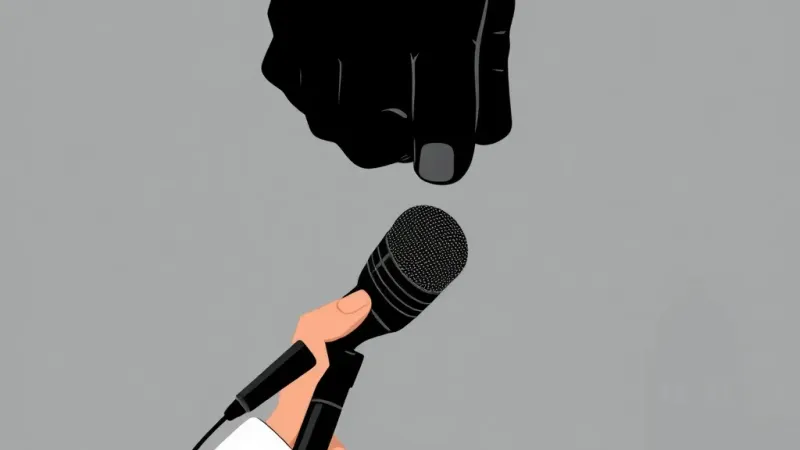
KABUL – The Taliban's intelligence forces have reportedly detained two key figures from Tolo News, Afghanistan's leading independent private television channel, further intensifying concerns over the rapidly deteriorating state of press freedom in the country. The arrests, confirmed by the broadcaster and widely condemned by international organizations, represent a significant escalation in the de facto authorities’ campaign to control information and silence critical reporting.
The individuals taken into custody are Khpalwak Safi, the news director for Tolo News, and Qudratullah Tariq, who heads the station's legal department. Details surrounding the exact charges or reasons for their apprehension remain opaque, with Tolo News stating the detentions followed a directive from the Taliban's intelligence agency. This incident is not isolated; it follows a pattern of increasing restrictions, threats, and arbitrary arrests targeting journalists and media outlets since the Taliban seized power in August 2021.
Media watchdogs and human rights advocates have been quick to denounce the actions. "These arrests are a chilling demonstration of the Taliban's blatant disregard for independent journalism and the public's right to information," stated Dr. Aisha Khan, a media ethics professor at a clandestine university in Kabul, speaking under conditions of anonymity. "It sends a stark message to every reporter in Afghanistan: self-censorship is not just advised, it's demanded, or you face dire consequences."
The targeting of Tolo News, a prominent voice that has continued to operate despite immense pressure, underscores the Taliban's systematic efforts to dismantle the progress made in media freedom over the past two decades. Journalists in Afghanistan now operate in an environment fraught with peril, where vague directives from the Ministry for the Propagation of Virtue and the Prevention of Vice can lead to immediate detention and uncertainty.
Previous instances of media suppression include the temporary detention of journalists reporting on protests, the imposition of restrictive guidelines on female broadcasters, and the enforced closure of several news agencies. "Every day, the space for truth shrinks," remarked Hamidullah Niazi, a former journalist now operating an underground news blog. "These detentions are designed to instill fear, to break the will of those who dare to report independently. We are witnessing the slow, agonizing death of a free press in Afghanistan."
International bodies, including the United Nations and numerous press freedom organizations, have called for the immediate and unconditional release of Safi and Tariq, urging the Taliban to uphold fundamental human rights, including freedom of expression and the press. However, such appeals have largely fallen on deaf ears, as the Taliban continues to consolidate its authoritarian grip, leaving the future of independent journalism in Afghanistan hanging precariously in the balance.


