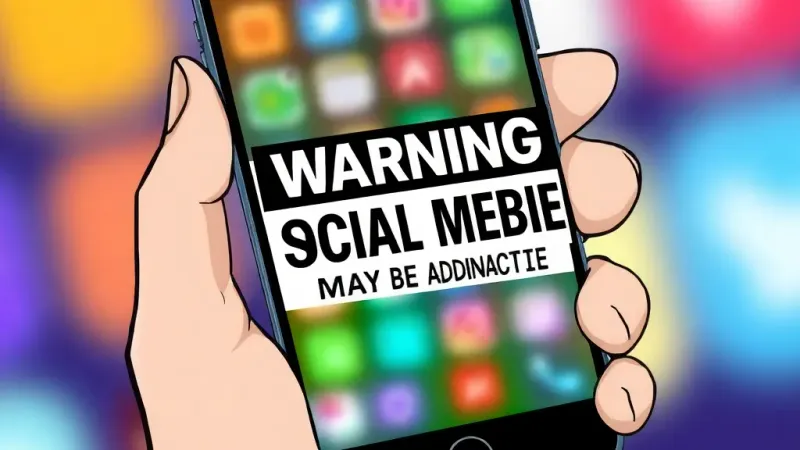
A landmark legislative proposal is currently making its way through state chambers, aiming to fundamentally reshape how social media platforms present themselves to users. Introduced by State Senator Evelyn Reed, the 'Digital Wellness Act' seeks to mandate prominent, clear addiction warnings on all social media applications and websites, drawing direct parallels to the labels found on tobacco products and alcoholic beverages. This bold initiative underscores a growing governmental concern over the pervasive and often detrimental impact of digital platforms on the mental health and developmental well-being of young Americans.
The proposed warnings would be designed to educate users, particularly minors, about the potential for compulsive engagement, anxiety, depression, and other adverse psychological effects associated with excessive social media use. Senator Reed, addressing a legislative committee, articulated the urgency of the measure: "For too long, these platforms have operated with impunity, exploiting the very psychological vulnerabilities of our youth for profit. It's time we arm parents and children with undeniable truths about what they're consuming." The bill specifically targets features perceived as inherently addictive, such as endless scrolling, notification prompts, and algorithmic content feeds designed to maximize screen time.
Recent scientific studies have increasingly illuminated the neurobiological mechanisms through which social media can foster addictive behaviors, particularly in adolescent brains still undergoing critical development. Dr. Aaron Finch, a behavioral psychologist specializing in digital health, commented, "The parallels between dopamine pathways activated by substance abuse and those triggered by constant digital validation are striking. These warnings are not merely symbolic; they represent a crucial public health intervention, providing a necessary counter-narrative to the otherwise seamless user experience." Advocates for the bill point to rising rates of adolescent mental health crises, arguing a direct correlation to increased social media immersion.
However, the proposed legislation faces anticipated resistance from powerful tech industry lobbyists and civil liberties advocates. Critics argue that such mandates could infringe upon free speech rights and present significant practical implementation challenges for platforms operating across diverse user bases and content types. "While we acknowledge concerns regarding youth well-being, this bill represents an overreach, potentially stifling innovation and impacting the fundamental ways individuals communicate," stated Mr. Samuel Chen, a representative for the Digital Innovations Coalition, during a recent press briefing. He suggested that educational initiatives and parental controls might be more effective and less intrusive alternatives.
Despite the expected opposition, the 'Digital Wellness Act' reflects a broader, bipartisan push to hold technology companies more accountable for their societal impact. The bill, currently undergoing committee review, is poised to spark robust debate on the balance between digital freedom, corporate responsibility, and public health. Its successful passage could set a precedent for similar legislative actions nationwide, potentially ushering in a new era of regulated digital consumption, with profound implications for both users and the tech industry alike.