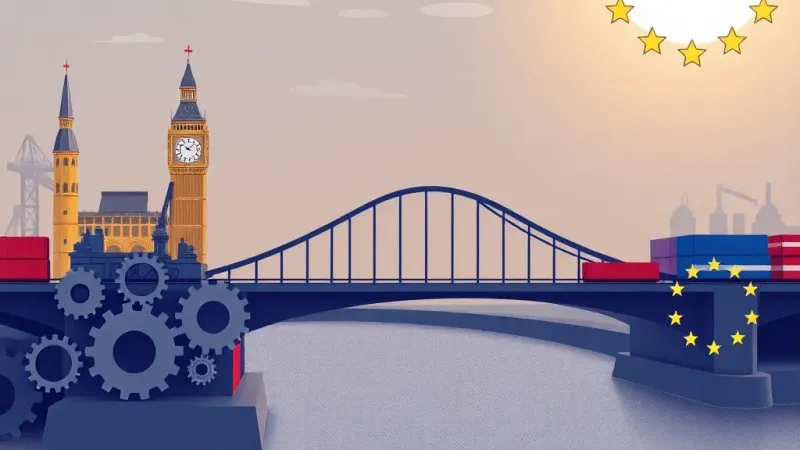
Reports circulating across various media outlets indicate that the United Kingdom government has initiated discussions with the European Union, proposing an arrangement effectively establishing a single market for goods. This purported overture signals a potentially significant shift in London's post-Brexit strategy, moving towards deeper economic integration with its largest trading partner specifically concerning industrial and agricultural products. If confirmed, the move challenges foundational tenets of the current Trade and Cooperation Agreement (TCA) and suggests a possible recalibration of the UK’s relationship with the 27-nation bloc.
Under the reported framework, the UK would align with EU regulations on goods, eliminating many customs checks and bureaucratic hurdles that have plagued cross-border trade since Brexit’s full implementation in January 2021. This alignment aims to ease the flow of goods, particularly benefiting sectors reliant on intricate supply chains and just-in-time logistics. Anonymous sources close to the discussions suggest the proposal seeks to address persistent economic frictions, including declining trade volumes and increased administrative burdens for businesses.
"Such a move could inject much-needed dynamism into the UK economy, particularly for manufacturers who have faced significant hurdles accessing the European market," stated Dr. Elias Vance, a senior economist at the Global Trade Institute. "While politically challenging, the economic rationale for reducing trade barriers on goods is compelling, potentially boosting GDP by billions and creating employment opportunities." He noted that British exporters currently navigate a complex web of customs declarations and regulatory divergence, costs ultimately passed on to consumers or absorbed by businesses.
The political ramifications are profound. Hardline Brexit proponents within the ruling party have consistently advocated for maximum divergence from EU standards, emphasizing the UK's regulatory sovereignty. A return to alignment, even partially, would undoubtedly face significant domestic opposition, potentially reigniting fierce ideological debates within Westminster. Conversely, business groups and those who campaigned for closer ties with Europe may welcome the move as a pragmatic solution to ongoing economic challenges, viewing it as a necessary course correction.
One critical aspect where this proposal could offer a path forward is the thorny issue of the Northern Ireland Protocol. By creating a de facto single market for goods across the UK and the EU, some complex checks currently required for goods moving between Great Britain and Northern Ireland could potentially be alleviated. "The current situation is unsustainable for many small businesses like mine," commented Ms. Clara Jenkins, who owns a textile import company based in Manchester. "If this proposal means fewer forms and faster deliveries across the Irish Sea and the continent, it's a lifeline. We need stability, not constant red tape."
Despite the detailed nature of these media reports, both Downing Street and Brussels have yet to officially comment on the veracity of the claims. The absence of official confirmation underscores the delicate and preliminary nature of such high-stakes diplomatic maneuvers. Analysts caution that even if discussions are underway, reaching a mutually agreeable resolution would require overcoming significant political and technical hurdles from both sides, given past disagreements over regulatory autonomy and jurisdiction. The coming weeks are expected to shed more light on whether this reported proposition gains official traction or remains a speculative, albeit significant, indicator of evolving post-Brexit thought.