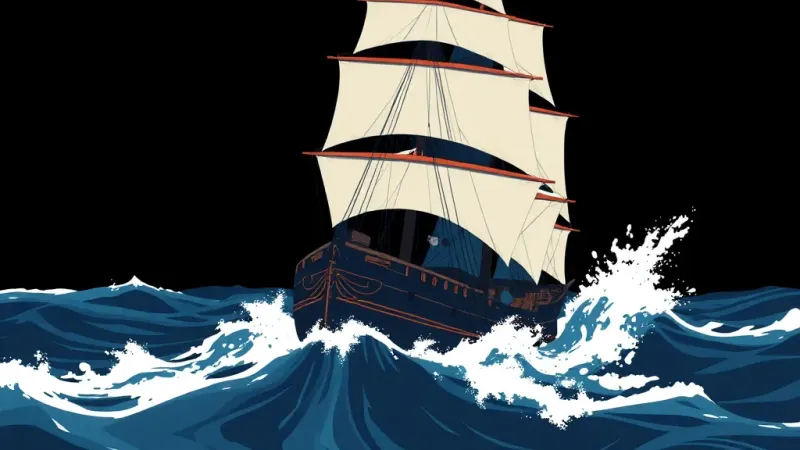
Syracuse, NY — Renowned historian and author Eric Jay Dolin recently captivated audiences on WRVO's esteemed "The Campbell Conversations," offering a compelling deep dive into America's foundational maritime industries and their enduring environmental legacies. The broadcast segment, aired last Tuesday, illuminated the profound impact of the early whaling industry, challenging listeners to reconsider the historical narrative surrounding resource exploitation.
Dolin, celebrated for his meticulous research and engaging prose, detailed the relentless pursuit of whale oil and bone that not only fueled significant technological innovation and economic booms across burgeoning American ports but also pushed several whale species to the precipice of extinction. He meticulously connected this historical rapaciousness to contemporary ecological challenges, asserting that a deeper understanding of past resource management—or lack thereof—is crucial for navigating present environmental crises.
Drawing from his extensive body of work, Dolin cited compelling examples from the 18th and 19th centuries, vividly illustrating how New England seaports like Nantucket and New Bedford flourished economically on the back of whale products. He underscored the boom-and-bust cycles inherent in such resource-dependent economies, where initial prosperity eventually gave way to scarcity as populations dwindled. Moreover, Dolin touched upon the prevalent cultural narratives that often romanticized the daring lives of whalers, inadvertently obscuring the colossal environmental toll and the unsustainable nature of their enterprise.
"The vivid details Dr. Dolin shared about the sheer scale of the whaling industry and its long-term ecological ripple effects were truly eye-opening," remarked Dr. Alistair Finch, a local environmental history enthusiast and retired educator, who tuned into the program. "It makes you rethink our current resource management strategies and consider how historical precedents continue to shape our approach to natural wealth."
Dolin further posited that acknowledging the economic necessities that drove early American whaling—providing essential lighting and lubrication for a nascent nation—does not preclude a critical examination of its methods and consequences. He suggested that understanding these historical patterns of overexploitation is fundamental for addressing a spectrum of contemporary environmental predicaments, from climate change to biodiversity loss. His discussion advocated for a more integrated approach, urging a symbiosis between historical scholarship and environmental science to inform future policy.
The interview garnered considerable listener engagement, with calls and emails flowing into the WRVO studios, underscoring the enduring relevance of Dolin's rigorous research and accessible storytelling. "The Campbell Conversations" continues its tradition of bringing distinguished scholarly perspectives to public discourse, enriching the regional conversation on pivotal historical and environmental issues. Dolin's insights provided a timely reminder that the past is not merely prologue but an active participant in our present ecological dilemmas.