
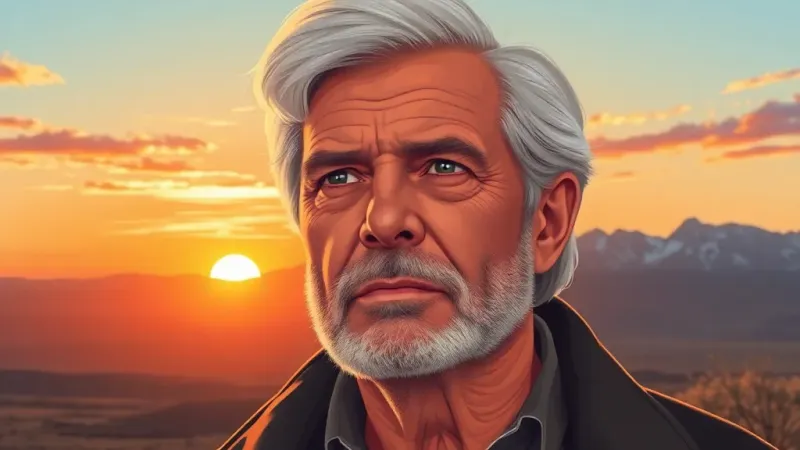
MISSOULA, MT – Decades after his initial encounter, veteran Montana journalist Elias Vance recently recounted his memorable interview with the late media mogul and conservationist, Ted Turner. The reflection offers a rare glimpse into the complex personality of a man who reshaped global news and became one of Montana’s largest private landowners, leaving an indelible mark on both industries and landscapes.
Vance, known for his incisive local reporting, found himself face-to-face with Turner not in a bustling corporate office, but amidst the expansive beauty of one of Turner's vast Montana ranches. The interview, conducted years before Turner's full retreat from the public eye, was for a regional feature exploring the mogul’s deep-seated commitment to environmental stewardship and the controversial reintroduction of bison. “He was exactly what you’d expect,” Vance recalled, referring to the encounter. “Brash, brilliant, and utterly unafraid to speak his mind, even when it might ruffle feathers. But beneath that formidable exterior was a genuine passion for the land and its future.”
Turner, the visionary behind CNN and a titan of broadcasting, leveraged his immense wealth and influence to acquire over two million acres of land across the American West, including significant holdings in Montana. His motivations were complex, blending a cowboy's romanticism for the frontier with a scientist’s pragmatism about ecological preservation. During their conversation, Vance observed Turner's laser-like focus as he articulated his vision for sustainable ranching and his pioneering efforts in bison conservation – projects that were often misunderstood or met with local skepticism.
The interview was not merely a Q&A session; it was an immersion into the world of a man who lived life on his own terms. Vance remembers the intensity in Turner's eyes as he spoke about climate change, long before it became a mainstream concern, and his frustration with bureaucracy. The journalist noted Turner’s unique blend of arrogance and idealism, a dichotomy that defined much of his public and private life. “It wasn't just about the answers he gave; it was about the palpable energy in the room,” Vance elaborated. “You felt you were witnessing a force of nature, much like the Montana wilderness he so cherished. It left a profound impression on me, highlighting the rare privilege of documenting such an impactful figure.”
Even now, with Turner largely out of the spotlight, his legacy reverberates across Montana. His ranches continue to operate as models for sustainable agriculture and wildlife management, particularly for bison. Vance's reflection underscores the enduring power of journalism to capture moments with figures who shape eras, offering a human perspective on giants whose influence extends far beyond their lifetime. Such encounters serve as powerful reminders of the individuals who, through sheer will and vision, leave an indelible imprint on the world, challenging conventional wisdom and inspiring future generations, whether they agreed with him or not.


