
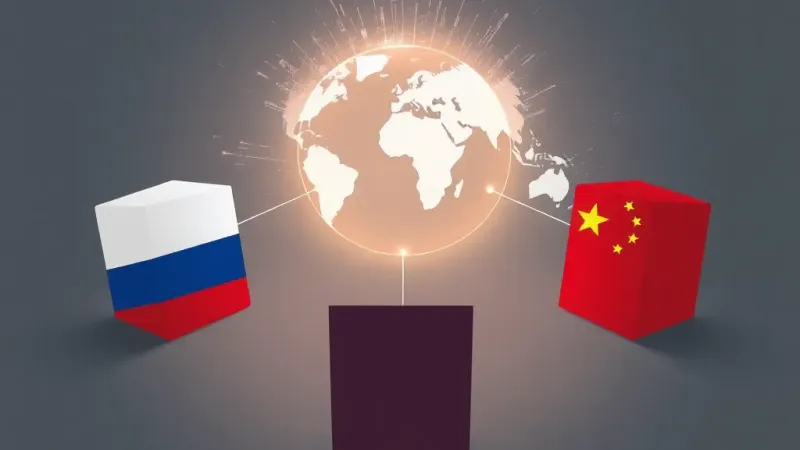
Moscow, Russia – In a potentially transformative development for global geopolitics, Russia is signaling a willingness to explore joint projects with both the United States and China. This unprecedented overture, relayed by a senior presidential envoy, suggests a strategic calculus by the Kremlin to foster cooperation on critical global challenges, even amidst a highly fragmented international landscape.
Mr. Igor Morgulov, the Russian presidential envoy for international cooperation, reportedly delivered the statement during a recent economic summit, emphasizing the necessity of forging common ground to address pressing global issues. While specific blueprints for these proposed ventures remain under wraps, the declaration itself represents a significant departure from conventional diplomatic posturing, hinting at a broader ambition to cultivate stability and progress through shared initiatives across diverse sectors.
The timing of this revelation is particularly salient. Relations between Russia and the United States remain severely strained by a myriad of disputes, while Moscow's partnership with Beijing has solidified dramatically in recent years. The prospect of trilateral collaboration, therefore, presents a complex diplomatic puzzle, challenging established notions of alliances and rivalries and inviting widespread speculation among international observers.
Analysts are already grappling with the profound implications of such a proposal. Dr. Elena Krivtsova, a prominent geopolitical strategist affiliated with the Institute for Global Security Studies, remarked, "The very consideration of these joint ventures underscores Moscow's remarkable strategic flexibility. This is an audacious proposition that, if successfully navigated, could unlock unparalleled opportunities for tackling global issues such as climate change, space exploration, and pandemic preparedness, potentially transcending traditional geopolitical blocs."
Potential arenas for this unprecedented collaboration could encompass a wide spectrum, from Arctic exploration and resource management, where all three nations possess significant strategic interests and capabilities, to advanced technological research and even large-scale infrastructure development projects in emerging economies. The underlying vision appears to be one where shared benefits could ultimately outweigh, or at least compartmentalize, individual political frictions, at least within defined spheres of cooperation.
However, the pathway to implementing such ambitious projects is undeniably fraught with substantial obstacles. Deep-seated mistrust, divergent national interests, and the extant architecture of sanctions and counter-sanctions present formidable hurdles. Mr. Leonid Petrov, an independent analyst specializing in Eastern European affairs, cautioned, "While the vision presented is undeniably ambitious, the practicalities are daunting. It would necessitate an extraordinary degree of diplomatic maneuvering and a genuine willingness from all three parties to set aside existing disputes for the sake of long-term mutual gains. The statement itself, however, is a clear signal of Moscow's dynamic and evolving diplomatic strategy, demanding serious consideration on the global stage."


