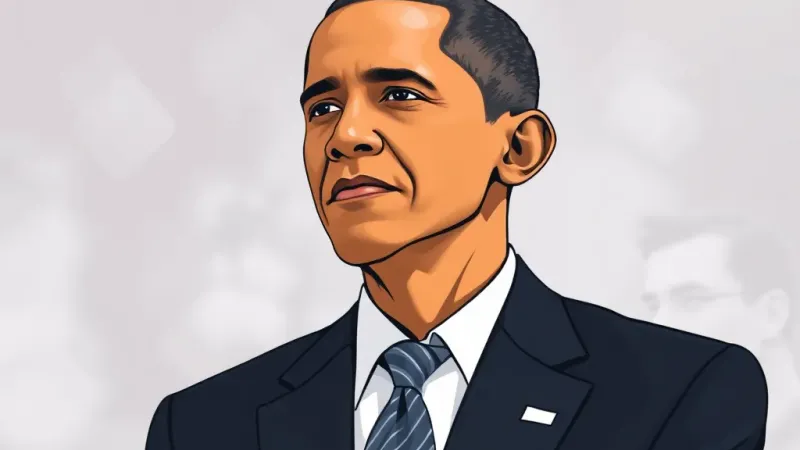
Former President Barack Obama has articulated a clear, strategic rationale for his relative silence regarding the presidency of his successor, Donald Trump. He views direct commentary not as an act of political leadership but as mere observation, a distinction he believes is crucial in maintaining the integrity and efficacy of his post-presidential endeavors.
The former commander-in-chief highlighted the complexities of the contemporary media landscape, observing that it frequently obscures the substantive work he undertakes. “If I’m constantly commenting on the day-to-day scrum, then I’m not a political leader, I’m a commentator,” Obama is understood to have conveyed, underscoring a deliberate choice to prioritize long-term influence over immediate political reaction. This perspective suggests a calculated effort to safeguard his platform from the ephemeral nature of daily news cycles.
This stance aligns with, yet also subtly redefines, the established convention of former U.S. presidents largely refraining from criticizing their successors. While this unwritten rule has seen varying interpretations across different administrations, Obama’s articulation frames his adherence not merely as decorum, but as an active strategy for leadership preservation. Historically, figures like George W. Bush maintained a largely public silence on the Obama years, emphasizing unity and respect for the office of the presidency.
By opting out of the partisan fray, Obama aims to channel his energy and considerable public goodwill towards initiatives he deems more impactful. This includes fostering democratic institutions, supporting young leaders globally, and addressing pressing issues such as climate change and civic engagement through the Obama Foundation. His assessment suggests that engaging directly in the political commentary surrounding the Trump administration would dilute his capacity to focus on these broader, non-partisan objectives, thus diminishing his unique role on the global stage.
Political strategists and historians have observed the nuanced effectiveness of this approach. Dr. Alana Sterling, a professor of political communication at Capital University, commented, “Obama's decision to distance himself from the immediate political discourse allows him to cultivate a more enduring legacy. He's choosing to build rather than react, which, in the long run, could amplify his influence on future policy and public opinion far more than daily critiques ever could.”
Obama’s deliberate post-presidency strategy underscores a profound understanding of how influence is wielded in a polarized age. His silence, therefore, is not an absence of opinion, but rather a carefully chosen method to secure his role as a substantive leader shaping future dialogue, rather than merely reflecting on past or present events.