
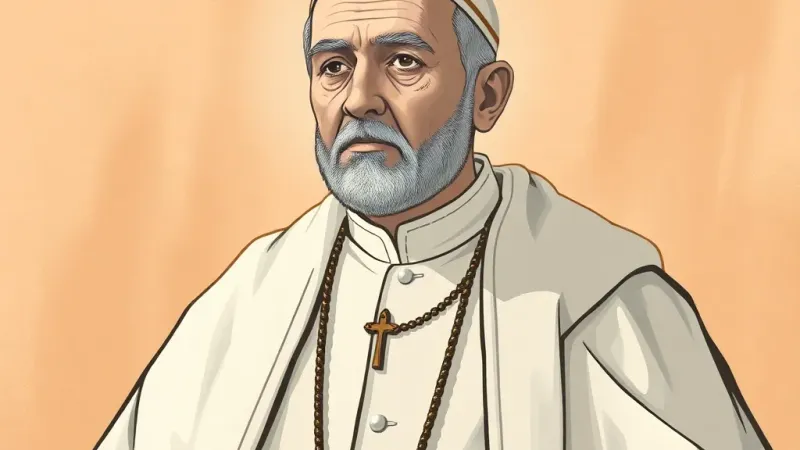
VATICAN CITY – Pope Leo XIV has vehemently rejected what he termed a “misguided narrative” perpetuated by certain media outlets, asserting that his recent statements regarding the African continent were not veiled criticisms aimed at any specific global political figure. The Pontiff's clarification came amid swirling speculation that his calls for solidarity and an end to isolationism were implicitly targeting the divisive rhetoric of a prominent world leader, particularly in the United States.
The controversy ignited following Pope Leo XIV's address to a general audience last week, where he spoke passionately about the richness and challenges facing Africa. “Africa is not a continent to be exploited, but a land of vibrant cultures and immense potential, deserving of respect, investment, and genuine partnership,” the Pope stated, emphasizing the urgent need for global cooperation rather than policies of exclusion. He further elaborated on the moral imperative to embrace migrants and refugees, highlighting their inherent dignity and the Christian duty of hospitality. These remarks were widely interpreted by numerous news agencies and political commentators as an oblique rebuke of nationalist and anti-immigrant sentiments expressed by certain world leaders, with many drawing direct parallels to a former U.S. President.
However, during an unscheduled press briefing at the Vatican's Apostolic Palace this Tuesday, His Holiness directly addressed the interpretive storm. “My message is universal, always,” Pope Leo XIV declared, his voice firm but patient. “It is a message of the Gospel, of human dignity, of the Church's social doctrine, applicable to all nations and all peoples. To reduce it to a political jab against any individual is to profoundly misunderstand its spiritual foundation and its broader call for global human fraternity.” He underscored that his concern transcends temporal politics, focusing instead on timeless principles of justice and peace.
Dr. Elena Rossi, a respected Vatican observer and professor of ecclesial studies at the Pontifical Lateran University, commented on the situation. “The Holy Father consistently speaks from a theological and humanitarian perspective. The attempt to politicize every papal utterance, especially in our highly polarized global environment, often misses the profound depth of his spiritual appeals,” she observed. “His comments on Africa are consistent with decades of papal teachings on development, migration, and international relations.”
The Vatican press office reinforced the Pope's stance, issuing a statement that reiterated the Holy See's commitment to diplomatic neutrality while upholding moral principles. “The Holy Father's words are a beacon for all humanity, encouraging dialogue, compassion, and shared responsibility,” read the communiqué. “They are never intended to engage in partisan political commentary or to endorse or condemn specific political actors.” This forceful rejection aims to redirect the focus back to the humanitarian core of the Pope's message, away from the political interpretations that have dominated recent headlines. For many Catholics, this clarification served as a vital reminder of the Church's universal mission, urging them to look beyond immediate political interpretations and embrace the broader call for global solidarity.


