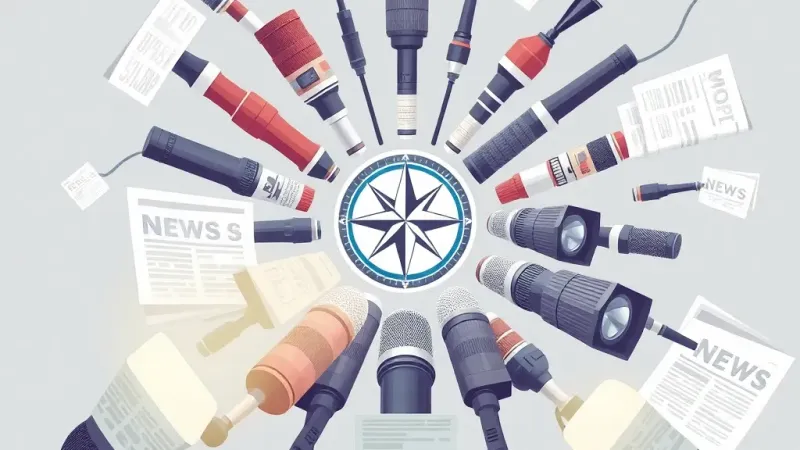
The tumultuous election of 2016 sent shockwaves through the journalistic establishment, prompting a rigorous and often painful period of introspection. A central question, widely circulated among media observers and professionals, has been: What, precisely, did the press learn from that transformative year? The answers, while still evolving, point to fundamental shifts in methodology, focus, and the very understanding of the media’s societal role.
Foremost among the acknowledged lessons is the critical need to transcend the 'bubble' phenomenon. Newsrooms across the nation recognized an over-reliance on urban narratives and established polling data, often at the expense of understanding diverse perspectives in less-covered regions. This led to a profound misreading of sentiment in significant swaths of the electorate. Journalists are now urged to embed more deeply in communities, engage with a broader spectrum of voices, and move beyond purely transactional interactions to genuinely comprehend the lived realities of all citizens, rather than merely reporting on them from a distance.
Another stark realization concerned the volatile landscape of information. The proliferation of misinformation and disinformation, amplified by social media platforms, exposed vulnerabilities in traditional journalistic gatekeeping. The industry grappled with how to effectively combat false narratives without appearing partisan or condescending. This has spurred significant investment in fact-checking initiatives, deeper investigations into online influence operations, and a renewed emphasis on explaining not just *what* happened, but *how* and *why*, providing crucial context in an increasingly fragmented information ecosystem.
The challenge of maintaining perceived impartiality in a hyper-partisan environment also came sharply into focus. Many outlets have re-evaluated their approaches to objectivity, distinguishing it from false equivalence. The consensus now leans towards an objectivity of method – rigorous verification, transparent sourcing, and clear distinction between reporting and analysis – rather than a forced neutrality that can obscure critical truths. As Dr. Eleanor Vance, a prominent media ethics researcher, noted, “The goal is not to present two sides as equally valid when one is demonstrably false, but to rigorously examine all claims and report the verifiable facts with clarity and conviction.”
These lessons have catalyzed tangible changes: increased investment in local journalism to foster deeper community ties, expansion of data journalism capabilities, and a greater commitment to transparency in reporting processes. While the journey of adaptation is far from over, the period following 2016 marked a decisive turning point, compelling the press to confront its shortcomings and forge a path toward a more resilient, representative, and trustworthy future.