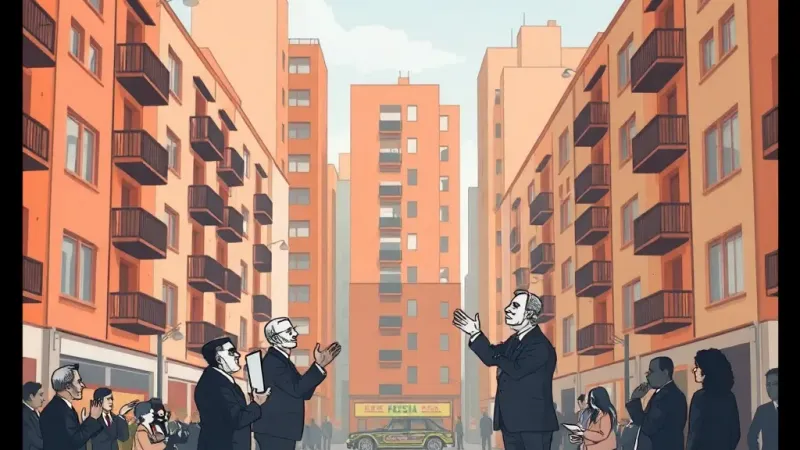
Providence, RI – The escalating debate over housing affordability in Providence, often framed as a battle between struggling tenants and landlords, is increasingly being perceived by informed observers as a complex political performance, rather than a genuine pursuit of sustainable solutions. While public outcry over rising rents and eviction notices dominates headlines, underlying political maneuvers and strategic positioning are dictating the narrative, leaving many to question the ultimate efficacy of current proposals.
At the heart of the contention are various legislative initiatives, including calls for rent control, which have energized tenant advocacy groups and drawn sharp rebukes from property owners. Councilor Elara Vance, a prominent voice for housing reform on the city council, stated in a recent public forum, "Our residents are facing unprecedented pressures. We must explore every avenue, including sensible rent stabilization, to protect the fabric of our community." This sentiment resonates deeply with a significant portion of the city's renter population, grappling with an average rent increase of 12% over the last year, according to a recent Rhode Island Housing Report.
However, the impassioned rhetoric often overshadows a deeper political calculation. Critics suggest that the most visible aspects of the "rent fight"—heated public hearings, impassioned protests, and promises of sweeping reform—serve more as political theater designed to mobilize specific voter bases rather than introduce feasible, long-term policy. "The proposed solutions often lack the nuanced understanding of the economic realities facing both tenants and property owners," explained Mr. Julian Thorne, spokesperson for the Rhode Island Property Alliance. "Implementing blunt instruments like arbitrary rent caps without addressing supply-side issues or property tax burdens will only exacerbate the problem, ultimately hurting the very people they claim to help."
Tenant advocates, while acknowledging the complexities, insist on immediate action. Ms. Lena Abbott, co-founder of Providence Tenants United, emphasized, "While discussions about long-term development are vital, people are being priced out of their homes right now. We need relief, and political will is the only thing standing in the way of meaningful change." Abbott points to the city's vacancy rate, which hovers around 3.5%, significantly below the 5-7% typically considered healthy for a balanced market. This scarcity inherently empowers landlords, driving up prices.
The true challenge, according to sources familiar with the city's political landscape, lies in the reluctance to tackle more intricate, less politically glamorous issues such as zoning reform, expedited permitting for new housing developments, and comprehensive public transportation infrastructure. These are the systemic factors that influence housing supply and affordability but often take a backseat to more emotionally charged debates. The current "fight," while generating significant public engagement, may ultimately divert attention from the substantive, albeit less dramatic, policy adjustments necessary to foster a truly equitable housing market in Providence. As the city grapples with its housing future, the distinction between genuine legislative progress and political spectacle remains a critical point of observation.