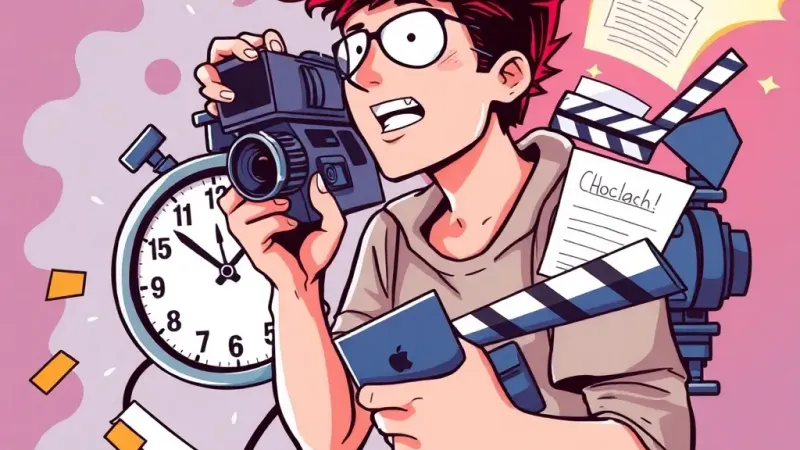
Western University's campus became a vibrant, sleep-deprived hub of cinematic ambition last weekend as dozens of students participated in the annual 48-Hour Film Challenge. From Friday evening's kick-off to Sunday's frantic final edits, student teams raced against an unforgiving clock to conceive, shoot, and produce original short films, showcasing remarkable ingenuity under extreme pressure. The event, hosted by the Department of Digital Media Arts, aimed to push creative boundaries and foster collaborative spirit among the university's burgeoning talent.
The rules were simple but daunting: teams received a random genre, a specific prop, and a mandatory line of dialogue at the challenge's commencement. This year's diverse assignments included everything from "sci-fi drama" requiring a vintage compass and the line "Are you sure this is the way?" to "noir comedy" incorporating a rubber duck. Each team, typically comprising 4-6 students, then had precisely 48 hours to complete their vision, from scriptwriting and casting to filming and post-production, culminating in a public screening.
"It's an absolute blur of caffeine and creative breakthroughs," remarked Anya Sharma, a third-year film studies student and director of the team behind "The Chronos Compass," a science-fiction short. "We started with nothing but a concept and a vintage compass, and by Saturday morning, we were shooting scenes in the deserted library basement. The challenge isn't just about making a film; it's about learning to make quick decisions, adapt, and trust your team when fatigue sets in." Sharma's team reportedly worked through two consecutive nights, fueled by enthusiasm and energy drinks, perfecting their narrative arc and special effects.
The resulting body of work was a testament to the students' diverse talents. A total of 18 films were submitted, ranging from the surrealist stop-motion animation "Echoes in the Cafeteria" to the surprisingly poignant drama "Beneath the Neon Glow." Judges, including local industry professionals and Western faculty, praised the technical proficiency and storytelling depth achieved under such constraints. The collaboration extended beyond the core teams, with many students lending their acting skills or technical expertise to multiple projects throughout the demanding weekend.
Dr. Julian Thorne, Head of the Department of Digital Media Arts, emphasized the pedagogical value of the event. "While the output is certainly impressive, the true success lies in the process. Students learn invaluable lessons in project management, crisis resolution, and interdisciplinary collaboration that traditional classroom settings often can't replicate," Dr. Thorne explained. "The intensity forces them to problem-solve on the fly and harness their collective strengths, skills that are paramount in the fast-paced media industry."
The challenge concluded with a well-attended screening in the university's main auditorium, where students, faculty, and community members celebrated the extraordinary efforts. Cheers and applause filled the hall as each film debuted, a powerful culmination of two days of relentless creative endeavor. The 48-Hour Film Challenge not only showcased Western's vibrant artistic community but also served as a crucial proving ground for the next generation of filmmakers, leaving participants exhausted but creatively invigorated for their next endeavor.