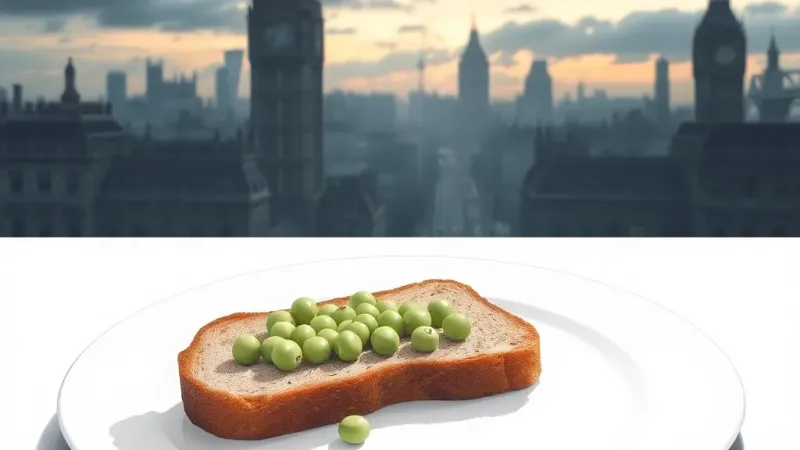
LONDON – A compelling new satirical exposé, "The Flavour Crisis: A Gastronomic Dissection of Broken Britain," is sparking widespread debate, using the unexpected metaphor of culinary degradation to dissect the nation's profound societal challenges. Penned by the pseudonymous Dr. Alistair Finchley, the work offers a scathing yet often hilarious critique of what many perceive as a country grappling with a diminishing sense of purpose and identity.
Dr. Finchley’s exposé posits that Britain has systematically lost its "flavour," a metaphorical decline mirroring the erosion of public services, the blandification of political discourse, and the general loss of zest in civic life. From the "mass-produced monotony of parliamentary debates" to the "diluted essence of community spirit," the book meticulously chronicles how the very ingredients that once defined British society have been either watered down, over-processed, or entirely forgotten. It suggests a journey from a vibrant, multi-layered national palate to a homogenized, insipid landscape, where authentic tastes are increasingly rare and deeply missed.
The author employs vivid, often unsettling, culinary imagery to underscore his points. He details the "stale bread of economic disparity," the "overcooked promises of regeneration projects," and the "artificial sweeteners coating bitter truths" in the media. One particularly pointed chapter describes the "absence of umami" in national leadership, arguing that a crucial element of satisfying depth has vanished from governance. This unique approach allows Finchley to address complex, sensitive issues with a disarming blend of wit and critical insight, making the abstract feel surprisingly tangible.
According to a statement attributed to Dr. Finchley, released through his publisher, "We've become so accustomed to the mediocre, the tasteless, that we no longer recognize the absence of true flavour in our national life. My work merely holds a mirror to this profound culinary—and civic—deficit, inviting readers to consider what we've lost and, more importantly, what we might still recover."
Initial reviews have been sharply divided, yet universally captivated. Ms. Eleanor Vance, a prominent cultural commentator, praised the work, stating, "Finchley has masterfully captured the zeitgeist, turning abstract despair into a surprisingly tangible and digestible concept. It’s a bitter pill, but one coated in exquisite wit and intellectual spice." Conversely, Mr. Gareth Thorne, a political analyst, cautioned that while undeniably clever, "The Flavour Crisis" risks trivializing genuine systemic challenges by couchings them exclusively in metaphor, potentially distracting from concrete policy solutions.
Regardless of critical reception, "The Flavour Crisis" has undeniably injected a fresh, if piquant, perspective into the ongoing national conversation about Britain's future. It serves as a potent reminder that sometimes, the most serious truths are best delivered with a spoonful of sugar – or, in this case, a pinch of satirical salt. The book is available nationwide, ensuring its controversial 'flavour' will continue to permeate discussions in homes and public forums alike.