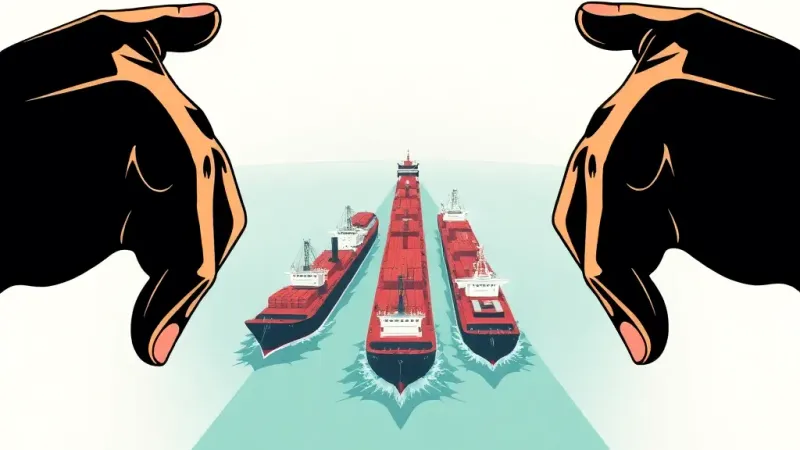
The Strait of Hormuz, a narrow yet profoundly vital waterway at the mouth of the Persian Gulf, is increasingly viewed by international observers as a hostage in the protracted and often fractious negotiations between the United States and Iran. As a crucial choke point for global energy supplies, the ongoing diplomatic impasse between Washington and Tehran casts a long shadow over the Strait’s stability, raising alarms about its potential weaponization. With approximately one-fifth of the world’s total petroleum consumption and significant global liquefied natural gas (LNG) transiting its waters daily, any disruption here carries catastrophic implications for the global economy.
Historically, the Strait has been a flashpoint, witnessing numerous incidents of naval confrontations, tanker attacks, and threats of closure by Iranian officials. This pattern has cultivated an environment of persistent uncertainty for international shipping. The inherent instability is exacerbated by the perception that the Strait’s operational status is dangerously tethered to the fluctuating fortunes of nuclear talks and sanctions relief, transforming a critical global artery into a potential bargaining chip.
Analysts argue that the Strait of Hormuz must be de-linked from the broader US-Iran political dynamic to ensure uninterrupted global trade. "The Strait's fundamental role as a conduit for global energy and trade cannot be relegated to a pressure point in bilateral discussions," stated Dr. Elara Vance, a geopolitical strategist at the Global Policy Institute. "Its stability transcends the immediate concerns of any two nations and demands a universal commitment to its unimpeded passage." This perspective underscores a growing international consensus that the Strait’s neutrality is paramount.
The economic ramifications of any significant disruption would be immediate and severe. Global crude oil prices would likely surge, impacting industries worldwide and straining consumer budgets. Shipping insurance premiums for vessels traversing the Strait, already elevated, would skyrocket, further increasing transportation costs. The ripple effect would extend beyond energy markets, potentially disrupting supply chains for countless goods, triggering inflationary pressures, and undermining fragile economic recoveries.
Regional stakeholders, from Saudi Arabia and the UAE to energy-dependent nations in Asia and Europe, possess a profound vested interest in the Strait's continuous, unhindered operation. The current situation places immense pressure on these nations to navigate a precarious geopolitical landscape while simultaneously advocating for the Strait’s security. The call for an international framework that guarantees free passage, independent of the volatile US-Iran relationship, is gaining traction as a long-term solution.
As the US and Iran continue their intricate diplomatic dance, the shadow of the Strait of Hormuz looms large, serving as a stark reminder of the broader regional stability at stake. For many, the imperative is clear: the Strait must not become a casualty or a tool in geopolitical maneuvering. Instead, it must be recognized as a shared global responsibility, demanding robust international guarantees to ensure its consistent role as a lifeline for worldwide commerce and energy security, detached from the unpredictable currents of bilateral negotiations.