
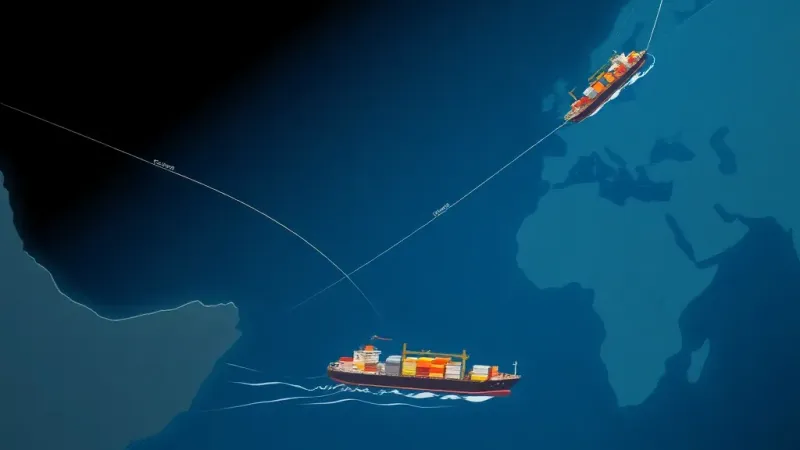
The Strait of Hormuz, a narrow yet profoundly significant waterway connecting the Persian Gulf to the Arabian Sea, continues to dominate international geopolitical discourse, with recent analyses highlighting its perennial importance to global energy security and maritime stability. Serving as the sole sea passage from the Persian Gulf to the open ocean, the Strait is a strategic chokepoint through which approximately 20% of the world's total petroleum consumption, or roughly 21 million barrels per day, transits, making any disruption a potential catastrophe for global markets.
Recent discussions among legal scholars and policy analysts have reiterated the delicate balance of international law and sovereign interests at play. The Strait, merely 21 miles wide at its narrowest point, falls within the territorial waters of Iran and Oman, yet it is governed by international conventions ensuring the right of transit passage. This dynamic creates a persistent flashpoint for diplomatic tensions, particularly between Iran and Western nations, regarding navigation rights and regional military presence.
"The Strait of Hormuz is more than just a shipping lane; it is an economic artery for dozens of nations and a crucible for international legal interpretations," stated Dr. Evelyn Reed, a prominent maritime security analyst at the Global Policy Institute. "Every vessel that navigates these waters carries not just cargo, but also the weight of intricate diplomatic agreements and potential vulnerabilities."
The historical context of the Strait is replete with incidents, including tanker attacks and naval confrontations, which have consistently underscored its fragility. The sheer volume of oil and liquefied natural gas (LNG) passing through makes it exceptionally vulnerable to geopolitical instability, economic blockades, or acts of aggression. Analysts warn that even minor incidents can trigger spikes in oil prices and disrupt supply chains, with ripple effects extending far beyond the immediate region.
Major global powers maintain a naval presence in the vicinity, ostensibly to protect maritime trade and uphold freedom of navigation. However, this presence itself can be a source of friction, contributing to a complex security environment where miscalculation carries significant risks. As global energy demands evolve and regional alliances shift, the enduring strategic importance of the Strait of Hormuz ensures it will remain a central concern for policymakers, economists, and international legal bodies alike.


