
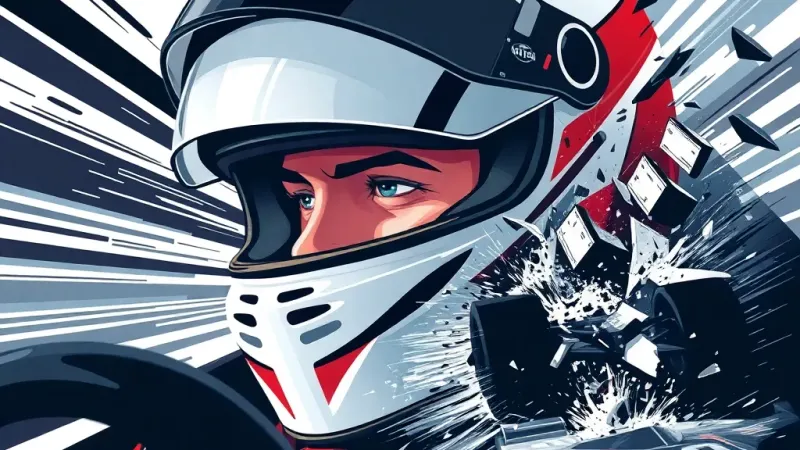
The roar of engines and the blur of color at the Indianapolis Motor Speedway belie a stark reality understood by every participant: crashing is not merely an unfortunate accident, but an inherent, almost anticipated, part of the job. As drivers push the limits of speed and engineering in pursuit of the coveted Borg-Warner Trophy, the specter of high-impact collisions looms large, shaping their mental approach to one of the most dangerous races in the world. This brutal acceptance underscores the unique psychology required to compete in the Indy 500, where the thin line between triumph and disaster is constantly tested.
At speeds routinely exceeding 220 miles per hour, the smallest miscalculation or mechanical failure can transform a finely tuned racing machine into a chaotic spectacle of twisted metal and flying debris. The forces involved in such incidents are immense, subjecting drivers to G-forces that can cause severe injury. Despite these formidable risks, veteran drivers articulate a surprising detachment, viewing the prospect of a crash with a mixture of pragmatism and dark humor. "You gotta be a certain kind of person to do this," stated former racer and current team strategist, Marcus Thorne. "We're a bunch of psychos, really, knowing what can happen and still wanting to get back in the car. It's just part of the deal."
This mindset is deeply rooted in the history of open-wheel racing, a sport that has historically claimed the lives of numerous competitors. While significant advancements in safety — from sophisticated car designs and enhanced barriers to mandatory HANS devices and medical teams — have drastically reduced fatalities and severe injuries, the fundamental danger persists. Modern IndyCar chassis are engineered to absorb and dissipate impact energy, yet the sheer velocity involved ensures that no crash is ever truly 'minor.' Each season brings new examples of drivers walking away from spectacular shunts, a testament to evolving safety protocols but also a stark reminder of the ever-present peril.
For many drivers, confronting this reality involves developing specific mental strategies. Some compartmentalize the risk, focusing solely on the immediate task of optimizing lap times and executing overtakes. Others, like rookie sensation Lena Petrova, admit to a fleeting moment of fear but quickly override it with competitive drive. "You feel the car get light, you know it's going, but then it's just instinct to react, to mitigate," Petrova explained after a recent practice incident. "There's no room for hesitation. The goal is the checkered flag, and everything else is just static in the background." This blend of calculated risk and unyielding ambition fuels the spectacle, demanding a rare breed of individual who can stare down potential catastrophe for the chance at glory. The willingness to accept, and even embrace, the dance with danger is what truly defines an Indy 500 driver, transforming high-speed crashes from mere incidents into a profound, if harrowing, element of their professional identity.


