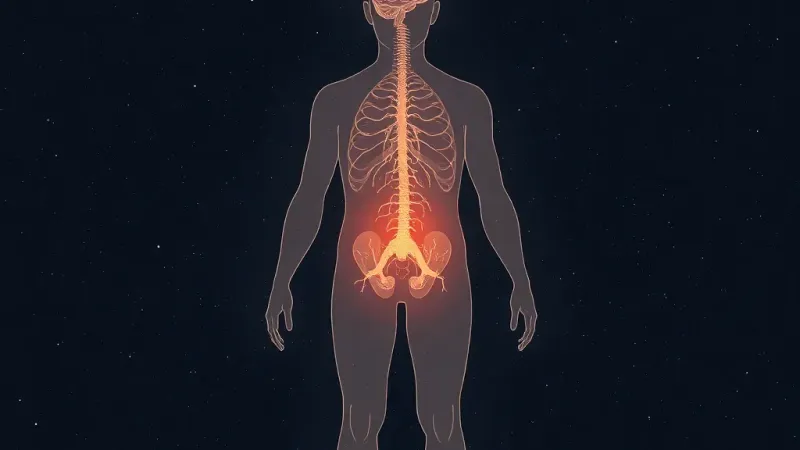
The relentless pursuit of interstellar travel and prolonged human presence beyond Earth’s protective embrace has ignited a crucial medical debate: what precisely is space doing to the human body? This pressing question takes center stage as Dr. Aris Thorne, a distinguished Senior Neurologist and Lead Researcher at the Institute for Aerospace Medicine, has issued a compelling commentary, urging the scientific community to confront the multifaceted and often insidious physiological challenges inherent in extraterrestrial environments. His inquiry highlights the urgent need for a deeper understanding of these effects before embarking on ambitious deep-space missions.
For decades, astronauts returning from even relatively short stints in orbit have exhibited a range of alarming adaptations. Microgravity, the most immediate culprit, initiates a cascade of systemic changes. Bones lose density at an accelerated rate, mirroring severe osteoporosis, while muscles atrophy from disuse and altered load. The cardiovascular system struggles to adapt, with fluid shifts leading to a 'puffy face' syndrome and reduced blood volume, culminating in orthostatic intolerance upon return to Earth's gravity. "The body is incredibly resilient," Dr. Thorne notes in his commentary, "but it was designed for Earth. Every system, from our skeletal framework to our neural pathways, undergoes a profound re-calibration in space, often with long-term consequences we are only beginning to fully comprehend."
Beyond the well-documented muscular and skeletal degradation, the neurological implications are proving particularly complex. Astronauts frequently report impaired vision, a condition known as Spaceflight-Associated Neuro-ocular Syndrome (SANS), believed to be linked to increased intracranial pressure. Studies have revealed changes in brain structure, altered cerebrospinal fluid dynamics, and potential impacts on cognitive function and sleep cycles. Dr. Thorne emphasizes, "The brain, the command center of the human experience, is under siege. We are seeing evidence of neural plasticity adapting to an alien environment, but the full scope of these changes, and whether they are reversible, remains a critical unknown for missions lasting years."
Compounding these issues is the relentless barrage of cosmic and solar radiation, a silent but potent threat largely mitigated by Earth's magnetosphere. Beyond low Earth orbit, this radiation exposure significantly escalates the risk of cancer, cataracts, and potential damage to the central nervous system. Developing effective shielding and pharmacological countermeasures is paramount, yet remains a formidable engineering and biological challenge. The cumulative dose over multi-year journeys to Mars, for instance, could exceed lifetime limits established for terrestrial workers, raising serious ethical and safety concerns for mission planners.
The call to action from Dr. Thorne underscores a pivotal moment in human spaceflight. As agencies worldwide lay blueprints for lunar bases and crewed missions to Mars, the health and safety of astronauts hinge on comprehensive research and innovative solutions. Understanding the nuanced interplay between microgravity, radiation, isolation, and altered circadian rhythms is no longer a peripheral concern but a central pillar of successful exploration. Without robust countermeasures and a thorough grasp of space's biological toll, humanity’s expansion into the cosmos could be prematurely curtailed by the very bodies intended to lead the charge.