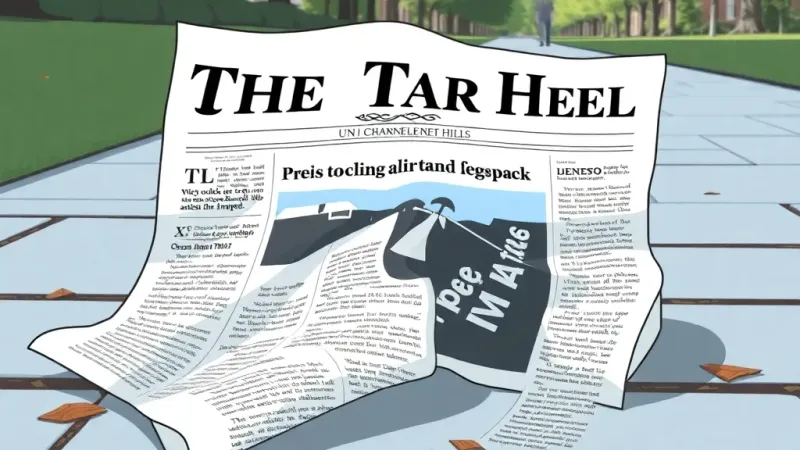
Chapel Hill, NC – The Daily Tar Heel, the independent student newspaper of the University of North Carolina at Chapel Hill, found itself at the center of campus debate last week after its eagerly anticipated April Fool's edition widely missed its comedic mark. Intended as a lighthearted diversion, the satirical issue instead prompted a wave of criticism from students, faculty, and alumni who described its content as confusing, uninspired, and, in some instances, insensitive.
The annual tradition, usually a source of amusement, featured articles that many readers struggled to differentiate from genuine news or found simply lacking in humor. Specific pieces, though cloaked in satire, were criticized for allegedly trivializing sensitive campus issues or for relying on simplistic tropes that failed to land with the intended audience. The absence of clear disclaimers or a consistent satirical tone throughout the publication compounded the confusion, leading to widespread disappointment rather than laughter.
Social media platforms quickly became a forum for frustrated readers. Hashtags emerged, with students sharing examples of headlines and articles they found problematic or outright baffling. “It felt less like satire and more like a collection of bad ideas," remarked Lena Hayes, a third-year journalism student at UNC. "There's a fine line between edgy humor and just being perplexing, and I think they definitely crossed into the latter this year. A news organization, even a student one, has a responsibility to its audience, even with satire.”
Dr. Aris Thorne, a Professor of Media Studies at the university, weighed in on the incident, emphasizing the inherent challenges of effective satire. “Satire requires precision, keen observation, and an understanding of the audience's sensibilities. When it fails, it often does so spectacularly because the humor is lost, or worse, perceived as genuine and offensive," Dr. Thorne stated. "Student papers are learning grounds, and sometimes those lessons are hard-won. This incident provides a valuable opportunity for the editorial team to reflect on tone, intent, and impact.”
While The Daily Tar Heel has not yet issued a formal apology or detailed explanation for the edition’s reception, sources within the student media organization indicate internal discussions are underway regarding editorial processes and future satirical endeavors. The incident underscores the delicate balance student journalists must strike when attempting humor, particularly in a landscape where clarity and ethical considerations are paramount. The episode is likely to serve as a stark reminder of the power of the press, even when attempting to be playfully subversive, and the critical importance of self-awareness in comedic undertakings.