
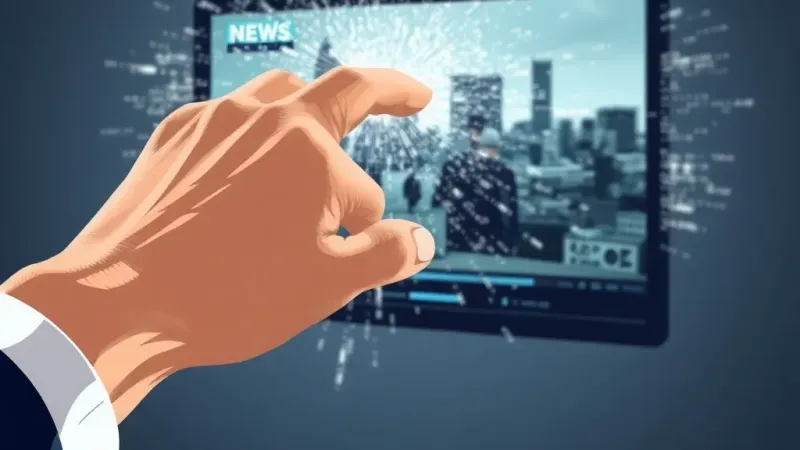
In an era increasingly defined by digital deception, the foundational principle of "seeing is believing" has suffered a critical blow, posing an unprecedented existential threat to the integrity of news and public trust. This alarming trend, highlighted by seasoned journalist Yalda Hakim, underscores a paradigm shift where visual evidence, once considered irrefutable, is now scrutinized with inherent skepticism, often justifiably so. The rapid proliferation of sophisticated deepfakes, AI-generated imagery, and expertly manipulated videos has created a precarious information environment, blurring the lines between reality and fabrication on a scale previously unimaginable.
The tools for creating deceptive visual content have become disturbingly accessible, enabling malicious actors to craft compelling narratives that appear entirely authentic. From political propaganda designed to sway public opinion to fabricated incidents intended to incite unrest, the digital landscape is awash with meticulously constructed falsehoods. These creations are disseminated globally within minutes through social media platforms, often reaching millions before any journalistic verification can occur. The sheer volume and speed of this disinformation challenge traditional gatekeeping roles of media outlets, forcing a re-evaluation of every piece of visual content.
For news organizations, this technological upheaval demands a radical transformation of journalistic practice. Newsrooms are now compelled to invest heavily in advanced forensic tools and specialized expertise to authenticate visual sources. The meticulous process of cross-referencing, metadata analysis, and employing AI-driven detection systems has become as crucial as traditional fact-checking. This intensive verification effort not only consumes significant resources but also delays the reporting process, often leaving news outlets struggling to keep pace with the instantaneity of online dissemination.
The societal ramifications extend far beyond the media industry. Public discourse itself is threatened as citizens lose faith in shared realities, creating fertile ground for polarization and distrust in institutions. "The erosion of visual trust isn't just a journalistic problem; it's a societal one," states Dr. Alistair Finch, a leading expert in digital forensics and media ethics. "When people can no longer distinguish between genuine reporting and AI-generated deception, the very foundations of informed decision-making and collective understanding begin to crumble." This sentiment echoes the broader anxiety felt by communities worldwide grappling with an increasingly volatile information ecosystem.
Navigating this treacherous terrain requires a multifaceted approach. Beyond technological solutions, there is an urgent call for enhanced media literacy education to equip the public with critical thinking skills necessary to discern authenticity. Furthermore, a renewed commitment to ethical journalism, transparent reporting of verification processes, and robust collaboration among news organizations will be pivotal in rebuilding and maintaining trust. As the digital mirage expands, the collective responsibility to champion truth in an age of manufactured reality becomes paramount.


