
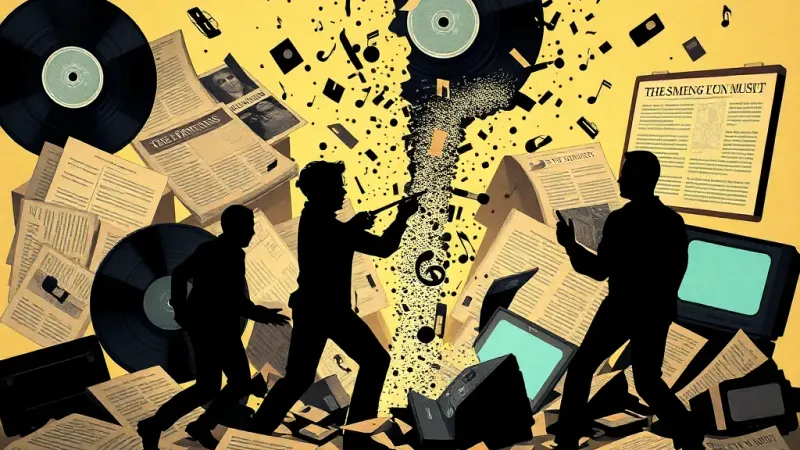
The venerable institution of music journalism, once a powerful arbiter of taste and cultural discourse, finds itself at a critical crossroads, battling for relevance in an increasingly fragmented digital landscape. The rise of streaming platforms, direct artist-to-fan communication, and the ubiquitous influence of social media have significantly altered how music is discovered, consumed, and discussed, prompting industry veterans and emergent voices alike to ponder the future of critical music writing.
For decades, publications like Rolling Stone, NME, and Melody Maker shaped public perception and launched careers, their critics holding sway over millions. The advent of online giants like Pitchfork continued this tradition, adapting it for the internet age. However, the economic models that once sustained these bastions have eroded dramatically, forcing a re-evaluation of what constitutes viable and impactful music journalism in the 21st century.
Print circulation has plummeted, digital advertising revenues prove insufficient, and the demand for freely accessible content often clashes with the cost of quality, in-depth reporting. Independent music blogs, once heralded as the future, now face similar financial precarity, often relying on passion projects rather than sustainable business models. The democratisation of opinion, while fostering diverse voices, has also led to an oversaturation of content, making it harder for authoritative voices to cut through the noise.
“We’ve witnessed a profound shift from informed critique to algorithmic curation and fan-driven echo chambers,” stated Eleanor Vance, a former editor for a prominent music publication. “The meticulous dissection of an album's nuances often gets lost amidst bite-sized reviews and influencer endorsements. It's challenging to maintain depth when attention spans are shrinking and the economic incentive for long-form analysis dwindles.”
Yet, not all perspectives echo a lament for a bygone era. “While the old guard mourns, new forms of insightful commentary are flourishing,” countered Julian Kross, a content creator known for his analytical music YouTube channel. “Podcasts, niche newsletters, and long-form video essays are reaching engaged audiences who crave deeper dives than a 500-word review could ever offer. It’s not dead; it’s simply decentralized and diversified, demanding a different kind of engagement from creators and consumers alike.”
This evolving ecosystem necessitates adaptation. Many outlets are pivoting towards subscriber-funded models, exclusive content, and live event curation to forge stronger connections with their audiences. The emphasis is shifting from merely reviewing to storytelling, cultural commentary, and community building, suggesting that while the traditional newspaper or magazine format may wane, the inherent human desire to understand and contextualize music persists. The next chapter of music journalism promises to be less about singular gatekeepers and more about a vibrant, if chaotic, mosaic of voices, each striving to articulate the ever-changing soundtrack of our lives.


